





What Dog Food Ingredients Are Best for Arthritis?
Table of Contents
- What Ingredients Should I Look for in Dog Food if My Dog Has Arthritis?
- How Does Diet Affect Arthritis in Dogs?
- Why Is a Healthy Weight So Important for Dogs With Arthritis?
- Which Ingredients Support Joint Health Best?
- What Ingredients Should Dogs With Arthritis Avoid?
- Is Fresh Raw Food Good for Dogs With Arthritis?
- Can the Right Diet Help Prevent Arthritis in Puppies?
- When Should You Talk to Your Vet About Your Dog's Arthritis?
- Ready to Support Your Dog's Joints With Fresh Food?
The best dog food ingredients for arthritis are high-quality animal protein, natural collagen, and naturally occurring glucosamine and chondroitin from cartilage-rich cuts, all delivered in a low-carb, portion-controlled diet that helps your dog stay lean.
Arthritis puts constant strain on a dog's joints, and every extra pound makes that strain worse. That's why what goes into your dog's bowl matters just as much as what stays out of it: starchy fillers and excess calories can quietly work against joint comfort.
Switching to minimally processed fresh dog food built around real meat, organs, and bone gives an arthritic dog the building blocks their joints and muscles need, without the heavy carbohydrate load of conventional kibble.
At We Feed Raw, every frozen raw recipe is formulated by a PhD animal nutritionist to be complete and balanced for all life stages, and our quick meal plan quiz portions each meal to your dog's ideal weight.
What Ingredients Should I Look for in Dog Food if My Dog Has Arthritis?
If your dog has arthritis, look for a dog food built on high-quality animal protein and natural sources of collagen, glucosamine, and chondroitin, in a low-carb formula portioned to keep your dog at a healthy weight.
These are the ingredients and qualities that matter most:
•High-Quality Animal Protein: Real muscle meat and organs supply the amino acids dogs need to maintain the muscle that supports and stabilizes painful joints.
•Collagen: Collagen is the main structural protein in cartilage, tendons, and ligaments. Bone and connective tissue are rich, natural whole-food sources.
•Glucosamine and Chondroitin: These compounds are natural components of joint cartilage. Cartilage-rich cuts like turkey necks, turkey tails, and chicken backs deliver them as part of a complete, whole-food meal.
•Low-Carb, Portion-Controlled Meals: Keeping starches low and portions accurate helps prevent the weight gain that places extra stress on arthritic joints.
•Natural Moisture: Fresh food naturally contains far more moisture than dry kibble, supporting your dog's everyday hydration.
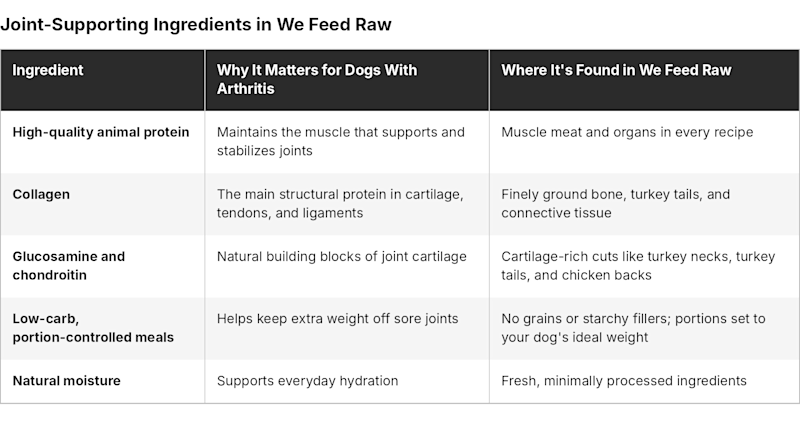
Quality animal protein, collagen, glucosamine, and chondroitin come naturally from the meat, bone, and cartilage-rich cuts in every We Feed Raw recipe.
How Does Diet Affect Arthritis in Dogs?
Diet affects arthritis in dogs by influencing body weight, muscle mass, and the nutrients available to maintain joint tissue, making nutrition one of the most important everyday tools for keeping an arthritic dog comfortable.
Osteoarthritis is the most common joint disease in dogs. A study of UK primary-care veterinary records estimated that around 200,000 dogs in the UK are affected each year, and estimates from North American referral clinics range from 20% of dogs over one year old to as many as 80% of dogs over eight.
Arthritis can't be reversed, but daily choices, especially what your dog eats, can make a meaningful difference in how they feel and move.
According to veterinarian Dr. Katie Woodley: "One of the first places I look when addressing chronic health concerns is the dog's diet."
What Are the Signs of Arthritis in Dogs?
The most common signs of arthritis in dogs are stiffness, limping, and a gradual slowdown in activity.
According to the veterinary charity PDSA, signs to watch for include:
•Stiffness: Especially after resting or after walks
•Limping or Lameness: Favoring one or more legs
•Muscle Loss in the Back End: Weakened back leg muscles that make the hips look narrower
•Slowing Down: Lagging behind on walks or tiring sooner than usual
•Mood and Sleep Changes: Sleeping more or seeming quieter or grumpier than usual
Because arthritis develops slowly, these signs are easy to mistake for normal aging. If you notice any of them, schedule a visit with your veterinarian.
Why Is a Healthy Weight So Important for Dogs With Arthritis?
A healthy weight is so important because every extra pound adds load to already painful joints, and research shows that keeping dogs lean both delays the onset of arthritis and reduces lameness in dogs who already have it.
Two well-known studies show just how much body weight matters:
•Lean Dogs Develop Arthritis Later: In a 14-year study of Labrador Retrievers, 42% of the leaner dogs had hip osteoarthritis by age 10, compared to 79% of their littermates who ate more. The leaner dogs also didn't need arthritis treatment until about three years later.
•Modest Weight Loss Eases Lameness: A University of Glasgow study of overweight dogs with osteoarthritis found that lameness improved significantly once the dogs lost just over 6% of their body weight.
Many conventional dry foods rely on starches to create and bind their kibble pieces. These carbohydrates add calories without supplying the quality protein and fat dogs actually need, making weight harder to manage.
As PhD animal nutritionist Dr. Richard Patton puts it: "The principal failing is that the man on the street thinks fat makes you fat. No. This is wrong. Carbohydrates make you fat."
We Feed Raw takes the guesswork out of weight management by calculating each meal plan around your dog's age, breed, activity level, and ideal weight.
Which Ingredients Support Joint Health Best?
The ingredients that best support joint health in dogs are high-quality animal protein, collagen, glucosamine, and chondroitin, all of which come naturally from the meat, bone, and connective tissue in a balanced fresh raw diet.
Why Does High-Quality Animal Protein Matter for Arthritic Dogs?
High-quality animal protein matters because strong muscles help support and stabilize joints, and dogs with arthritis are at risk of losing the very muscle that protects them.
Older dogs naturally tend to lose muscle mass, a condition known as sarcopenia. Dogs with sore joints often move less, which can make that loss worse and leave joints with even less support.
Bioavailable protein from real muscle meat and nutrient-dense organs supplies the essential amino acids dogs need to maintain lean muscle. Every We Feed Raw recipe is built on real muscle meat and organs, never plant proteins or rendered meat meals.
According to Dr. Patton: "Dogs do not have a nutritional requirement for starch. They do have a requirement for quality protein and fat."
How Does Collagen Support a Dog's Joints?
Collagen supports a dog's joints because it is the main structural protein in cartilage, tendons, and ligaments, the tissues that cushion and connect every joint.
Bone and connective tissue are among the richest natural sources of collagen. We Feed Raw recipes include finely ground bone and collagen-rich ingredients such as turkey tails in our turkey recipe and beef bone in our beef and lamb recipes, so your dog gets collagen as part of every complete meal.
Do Glucosamine and Chondroitin Help Dogs With Arthritis?
Glucosamine and chondroitin are natural building blocks of cartilage, the smooth, cushioning tissue that covers the ends of bones inside a joint, which is why they are among the best-known joint nutrients for dogs.
Rather than relying on pills, a whole-food diet can provide these compounds the way nature packages them.
Cartilage-rich cuts such as turkey necks, turkey tails, chicken backs, and chicken leg quarters naturally contain cartilage, delivering glucosamine and chondroitin alongside protein, collagen, and minerals in a single balanced meal.
Studies of standalone glucosamine and chondroitin supplements for arthritis pain haven't shown strong results, which is one more reason the whole diet matters more than any single add-on.
As Dr. Patton explains: "It's hard to correct a poor diet with supplements. You must first fix the food itself."
What About Marine Omega-3s and Green-Lipped Mussels?
Some veterinarians also recommend marine omega-3 fatty acids or green-lipped mussels for dogs with arthritis, and both have shown benefits in research.
In one clinical trial, 82% of arthritic dogs fed a food enriched with fish oil showed improved weight bearing, compared to 38% of dogs on a standard food. Green-lipped mussel has also eased chronic joint pain in a controlled trial.
Because We Feed Raw recipes are already complete and balanced, these aren't nutrients your dog is missing. They're optional extras your vet may suggest for your individual dog. If your vet does recommend more omega-3s, small portions of whole fish like sardines or anchovies make an easy, natural addition to your dog's bowl.
What Ingredients Should Dogs With Arthritis Avoid?
Dogs with arthritis do best on diets without heavy starchy fillers, excess calories, or frequent high-calorie treats, all of which make it harder to keep weight off aching joints.
Watch out for these common culprits:
•Starchy Fillers Including Grains: Corn, wheat, rice, potatoes, peas, and lentils add bulk and calories to many dry foods without the quality protein dogs need.
•Calorie-Dense Treats and Table Scraps: Treats add up quickly. Count them toward your dog's daily calories, and choose small, protein-based options.
•Oversized Portions and Free-Feeding: Leaving food out all day or estimating portions by eye makes it easy for a less active, arthritic dog to gain weight.
Is Fresh Raw Food Good for Dogs With Arthritis?
Yes, fresh raw food is an excellent foundation for dogs with arthritis because it delivers high-quality animal protein, natural collagen, glucosamine, and chondroitin in a low-carb meal that's easy to portion for a healthy weight.
Here's how We Feed Raw supports dogs with joint concerns:
•Real Meat, Organs, and Bone: Each frozen raw recipe combines quality muscle meat, nutrient-dense organs, and finely ground bone for complete, bioavailable nutrition.
•Collagen- and Cartilage-Rich Cuts: Our recipes include ingredients like turkey tails and necks, chicken backs and leg quarters in our chicken recipe, and beef bone, naturally supplying collagen, glucosamine, and chondroitin.
•Low-Carb Nutrition: With no grains or starchy fillers, our recipes help keep extra weight off sore joints.
•Portioned to Your Dog's Ideal Weight: Every meal plan is calculated for your dog, so you never have to guess how much to feed.
•Soft, Easy-to-Eat Texture: Finely ground patties are gentle for senior dogs, including those with dental problems.
•Complete and Balanced: All five frozen recipes meet AAFCO nutrient profiles for all life stages, so there's nothing you need to add.
•Safety Without Heat: Every recipe is cold-pasteurized with high-pressure processing (HPP) to achieve a 5-log, or 99.999%, reduction in potentially harmful pathogens, making it as safe as gently cooked without using heat.
For adult dogs, our shelf-stable freeze-dried raw recipes offer the same complete, low-carb nutrition with pantry convenience.
Veterinarian Dr. Dana Alazzeh, DVM, notes: "My goal is always to support what keeps pets healthiest and happiest, and for many dogs, a balanced raw diet does exactly that."
Can the Right Diet Help Prevent Arthritis in Puppies?
Yes, the right diet can help protect a puppy's developing joints.
Keeping puppies lean as they grow and feeding properly balanced calcium and phosphorus can lower the odds of joint problems later in life.
In the long-term Labrador study, researchers found that by age two, only one of 24 leaner dogs had developed hip osteoarthritis, compared to six of 24 dogs who ate more.
Large-breed puppies are especially sensitive to mineral imbalances during growth. All five We Feed Raw frozen recipes are complete and balanced for all life stages, including the growth of large-breed puppies.
When Should You Talk to Your Vet About Your Dog's Arthritis?
You should talk to your vet as soon as you notice stiffness, limping, or changes in your dog's activity level, since early diagnosis gives you the most options for keeping your dog comfortable.
Your veterinarian can confirm whether arthritis is the cause, recommend pain management if needed, help you set a target weight, and advise on any supplements that make sense for your dog.
It's also a great time to talk through diet changes, especially for dogs with other health conditions.
As Dr. Katie Woodley says: "I encourage pet owners to think of food as part of their dog's healthcare plan."
Ready to Support Your Dog's Joints With Fresh Food?
Supporting a dog with arthritis starts in the food bowl. By replacing starchy fillers with high-quality animal protein, natural collagen, glucosamine, and chondroitin, and by keeping your dog at a healthy weight, you give their joints the best possible foundation every single day.
We Feed Raw makes it easy. Our complete, low-carb fresh meals are formulated by a PhD animal nutritionist, portioned to your dog's ideal weight, and delivered straight to your door.
Take our quick online quiz today to build a personalized meal plan and help your dog move more comfortably.
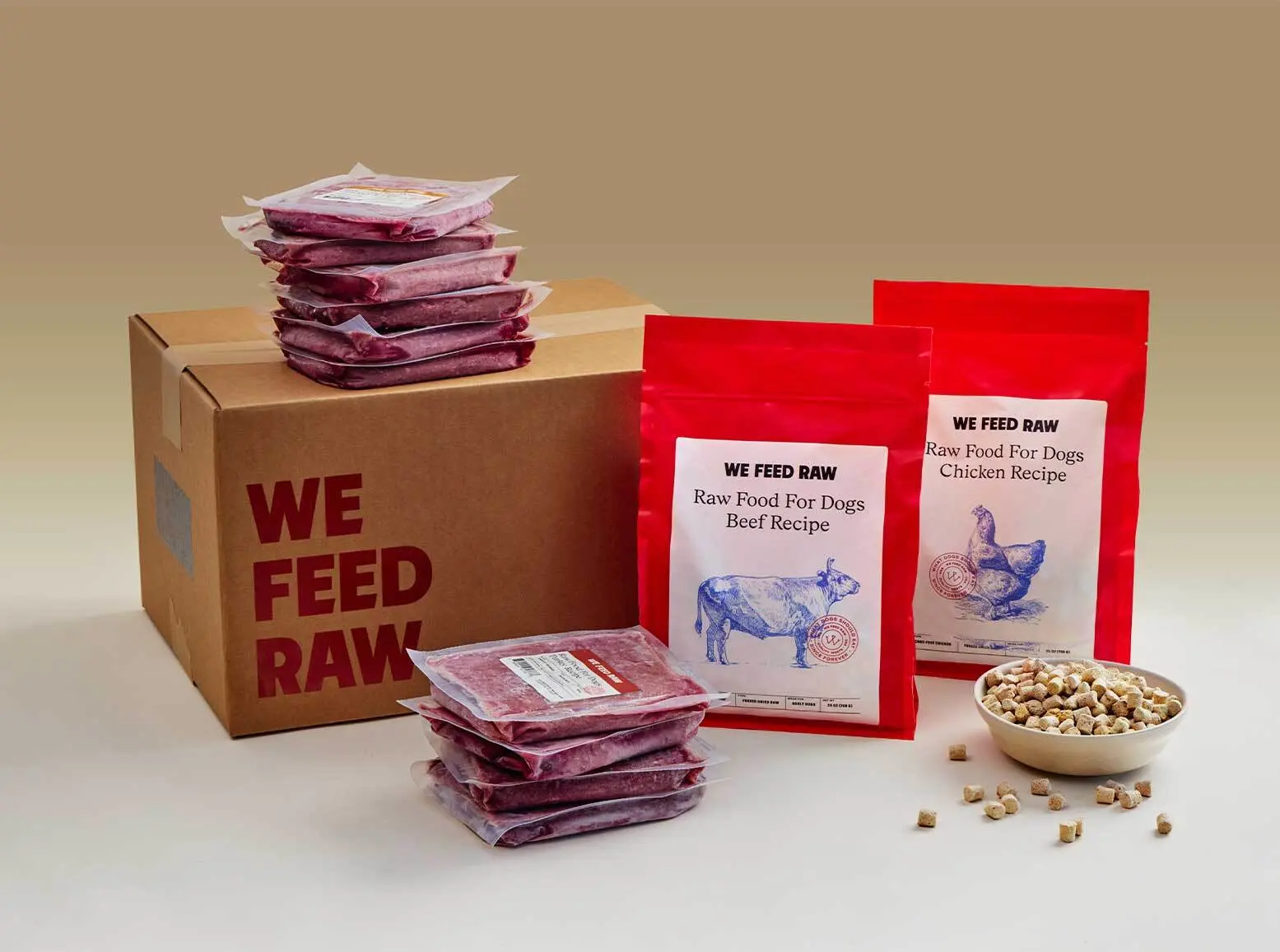
Our Meals Change Lives.
(Theirs + Yours.)
See health improvements from our raw meals in as little as 1 week.
Find your dog's perfect plan


