


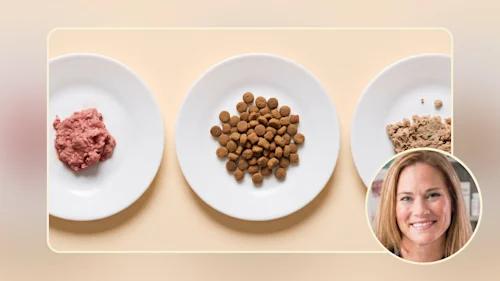


Raw vs Fresh vs Kibble. Which Dog Food is Actually Better?
Table of Contents
- Key Takeaways
- 1. What's the Difference Between Raw, Fresh, and Kibble?
- 2. Why Does Meat Content Matter More Than the Label on the Food?
- 3. What Are the Nutritional Benefits of Raw Feeding?
- 4. Is Raw Dog Food Safe?
- 5. Is Raw Feeding More Expensive or Less Convenient?
- 6. What I Recommend as an Integrative Veterinarian
- 7. What I Look for in a Commercial Raw Dog Food
- Frequently Asked Questions About Raw vs. Fresh vs. Kibble
- Final Thoughts: Why I'm an Advocate for Meat-First Raw Nutrition
- About the Author
- References
Is raw dog food better than fresh cooked food or kibble? As an integrative veterinarian, I prefer a high-quality, meat-first raw diet for dogs and households where it's appropriate. It gives dogs animal-based nutrition without the heat used to extrude kibble or cook fresh food.
All three can be complete and balanced, and they still differ a lot in what ends up in the bowl. I'll walk you through how each one is made, what the research shows, and how I choose a raw food for my own patients.
Key Takeaways
•Processing matters. Kibble is usually extruded at high temperatures and fresh food is cooked. Raw food skips cooking entirely.
•Check where the protein comes from. Pea protein and corn gluten meal can push up the protein percentage on a label without adding any meat.
•Raw diets can be highly digestible. In a 2024 controlled study, the frozen raw diet tested had 93% apparent protein digestibility, compared with 86% for the fresh diet and 82% for the kibble.
•Diet shapes the gut. In controlled studies, dogs eating raw, fresh, and extruded diets produced different amounts of stool and carried different gut bacteria.
•Formulation and safety come first. A good commercial raw food is complete and balanced and goes through a validated pathogen-reduction step. It still needs careful handling at home.
•Partial raw feeding counts. Replacing part of your dog's kibble with a complete and balanced raw food adds meat-first nutrition without the full cost.
1. What's the Difference Between Raw, Fresh, and Kibble?
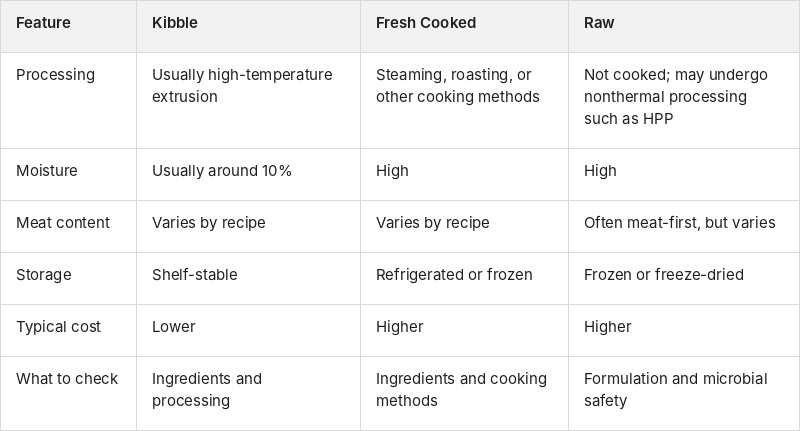
The biggest differences come down to how the food is processed and what goes into the recipe.
How is kibble made?
Most dry dog food is made through a process called extrusion. I think a lot of pet parents would be surprised by how it works. I know I was when I started learning about food processing as a veterinarian!
Ingredients such as rendered meat meals, grains, and starches are ground and mixed together. Rendered meals have usually been heat-processed once already, before they ever reach the kibble plant.
Steam and moisture are added in a preconditioner. Then the mix goes into an extruder, where rotating screws use heat, pressure, and mechanical shear to cook and shape it.
Research describes extrusion temperatures of roughly 80–200°C (176–392°F), depending on the manufacturing conditions. Not every kibble reaches the top of that range, but the heat exposure can be substantial.
After extrusion, the kibble is dried and often sprayed with fats or flavor enhancers.
Extrusion also gelatinizes starch. Heat and moisture change the starch's structure, so it's easier to digest and holds each piece of kibble together. So in kibble, starch has a manufacturing job on top of supplying energy.
Extrusion makes starch easier to digest, keeps food shelf-stable for months, and lowers some microbial risks. That same heat also changes nutrients.
Does high-temperature processing affect nutrients?
Yes. Heat changes how available some nutrients are and sets off chemical reactions in the food.
One example is the Maillard reaction, where sugars react with amino acids during heating. A review by van Rooijen and colleagues describes how this reaction can reduce the availability of certain essential amino acids in pet food, particularly lysine.
Heating can also produce acrylamide and advanced glycation end products (AGEs).
Acrylamide is classified as a probable human carcinogen, based largely on animal research. A 2021 study by Sugita and colleagues measured acrylamide in commercial dog foods and found higher average levels in the dry foods tested than in the canned and retort foods.
Does that mean kibble causes cancer? No. We don't have the clinical evidence to make that claim.
But if we're feeding our dogs the same food every day for years, I think it's worth paying attention to the compounds manufacturing creates.
AGEs are being studied for their role in oxidative stress and inflammatory signaling. Their clinical importance in dog food is still unclear, and kibble isn't the only source.
What does the research say about cooking and nutrients?
A 2009 study by Gerber and colleagues looked at how cooking affected six cuts of meat.
Cooking reduced fat content by about 18–44%, and every vitamin the researchers measured went down. Thiamine (vitamin B1) losses ranged from 73–100%, depending on the cooking method.
This was a study of cooked meat, not kibble, and some of those nutrients ended up in the cooking juices. Even so, it shows how much heat can change what's in a piece of meat.
Cooking also makes some nutrients more available, and a well-formulated cooked diet is designed to make up for processing losses. So I always look at processing alongside the recipe itself.
Is fresh cooked dog food better?
Fresh cooked foods are usually steamed, roasted, or cooked by another controlled method. They hold much more moisture than kibble, and some companies cook at gentler temperatures than extrusion uses.
Brands vary enormously. Some fresh diets are built on animal protein, while others lean heavily on starches, grains, or legumes.
Fresh doesn't automatically mean meat-first.
What makes raw food different?
Raw dog food skips cooking altogether. A properly formulated raw diet provides muscle meat, organ meat, and the other ingredients needed to balance the recipe, all without exposure to cooking temperatures.
That's one of the reasons I appreciate raw feeding.
The word raw on a bag only tells you how the food was processed. You still need to check the recipe and the company that makes it.
2. Why Does Meat Content Matter More Than the Label on the Food?
Here's something that drives me a little crazy about dog food marketing. A company can advertise “high protein” without using much meat at all.
Dogs are often described as facultative carnivores. You'll also see them called nutritional omnivores, because they can digest and use plant ingredients, and they've evolved adaptations for digesting starch.
So dogs can digest carbohydrates. Healthy adult dogs have no established dietary requirement for them, though. They can make the glucose they need through gluconeogenesis as long as their other nutritional needs are met.
I use plant ingredients on purpose all the time for my patients, especially for fiber. Certain fibers feed beneficial gut bacteria, which produce short-chain fatty acids like butyrate that support intestinal health.
My priority is still high-quality animal ingredients, because they're such rich sources of essential amino acids and fats.
High protein isn't always high meat
Picture two dog foods. The first lists chicken, turkey, and organ meats as its main ingredients. The second has some chicken plus large amounts of pea protein and corn gluten meal.
Both might advertise 30% crude protein. The first one gets far more of that protein from meat.
Plant proteins can add useful nutrients. To compare foods properly, look at the amino acid profile, digestibility, and who formulated the recipe, along with the ingredient list.
Don't forget moisture
Raw and fresh foods hold far more water than kibble, so compare protein or fat on a dry-matter or calorie basis. Otherwise, the percentages printed on each package will mislead you.
I see this a lot in veterinary practice: a family tries one sensitive-stomach kibble, then another, and eventually a fresh food subscription. When we compared the nutritional composition of those foods side by side, they were often much more similar than the owners expected.
3. What Are the Nutritional Benefits of Raw Feeding?
Raw feeding gives your dog high-quality animal ingredients and plenty of moisture without heat cooking. In research, some raw diets have also been highly digestible and have changed stool output and the gut microbiome.
Is raw dog food more digestible than kibble?
In controlled feeding studies, some raw diets have been more digestible than the kibble tested against them.
A 2024 study by Geary and colleagues fed five commercial foods to ten healthy adult dogs: a frozen raw, two freeze-dried raw, a fresh cooked, and an extruded diet. The table shows the kibble, fresh, and frozen raw results.
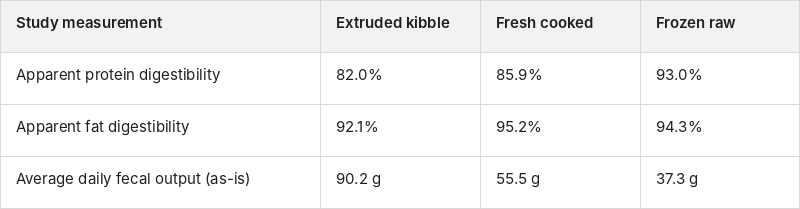
Geary et al., 2024: specific diets in healthy dogs; these figures do not describe every kibble, fresh, or raw food.
The dogs eating frozen raw digested more of the protein and produced less than half the stool of the kibble-fed dogs. (Less poop to pick up is always nice!)
The fresh diet beat the kibble too, and it had the highest fat digestibility of the three. A 2018 study by Algya and colleagues found something similar. Two mildly cooked diets were more digestible than the tested kibble, and the raw diet was also highly digestible, though it didn't top every measure.
A study by Bermingham and colleagues found that dogs eating a raw red meat diet had higher apparent protein and energy digestibility and produced less fecal material than dogs eating the kibble tested.
What I take from this research: Digestibility studies show how much of a food a dog actually absorbs, which tells me far more than a claim on a bag. The recipes in these studies also differed in protein source, fat, and fiber, so processing explains only part of the difference.
Does raw feeding affect the gut microbiome?
You know I can't talk about nutrition without bringing up gut health!
The gut microbiome helps with digestion and immune signaling, and what we feed changes it.
A 2017 study by Sandri and colleagues followed eight healthy Boxers and found greater fecal microbial diversity when they ate a raw meat-based diet with added vegetables than when they ate an extruded diet. The Geary study found differences in more than 40 bacterial genera across the diets it tested.
These are early findings. We still need long-term studies to learn which microbial changes lead to better health.
If your dog has ongoing digestive problems, I go deeper on this research in my article Raw Food for Dogs With Sensitive Stomachs and Digestive Issues.
Raw food contains more moisture
Kibble is typically around 10% moisture, while raw and fresh foods contain far more, which adds to a dog's daily water intake. Dogs on dry food make up the difference by drinking more, but I still factor moisture into a feeding plan.
What I've seen in my veterinary patients
I've worked with plenty of dogs who have been through one kibble after another, sometimes including expensive prescription diets, and are still struggling with digestive problems.
Many of these dogs do really well after moving to an appropriately formulated raw diet. Their symptoms improve a lot, and sometimes they resolve completely.
We're usually changing other things at the same time, so I can't give the raw food all the credit. I've seen it often enough, though, that nutrition is one of the first places I look with chronic health problems. I also use well-formulated raw diets proactively in my patients as part of my approach to long-term health.
4. Is Raw Dog Food Safe?
Any type of dog food can be contaminated or mishandled. With raw food, bacteria are the main concern.
Raw animal ingredients can carry pathogens such as Salmonella and Listeria, and dogs can shed these bacteria without showing signs of illness. That's why I'm particular about which commercial raw food companies I recommend.
What is high-pressure processing?
High-Pressure Processing (HPP), sometimes called cold pasteurization, uses extremely high pressure to reduce harmful microorganisms without cooking the food. Properly validated HPP gives meaningful pathogen reduction. The food still isn't sterile, so I also look at how a company sources and tests what it sells.
For example, We Feed Raw sources meat from USDA-inspected suppliers, produces its meals in an SQF Level 3-certified facility, and uses HPP with a validated five-log pathogen reduction process. That's a 99.999% reduction in the targeted microorganisms under validated conditions. They also independently test every batch before it's released.
Those are the kinds of safety protocols I want to see.
I cover raw food safety in much more detail in Is Raw Dog Food Safe? A Veterinarian Explains What to Look For.
5. Is Raw Feeding More Expensive or Less Convenient?
Let's talk about cost, because I totally get it! I fed my German Shepherd a fresh food diet, and he ate a LOT. Big dogs aren't cheap to feed!
Kibble is generally the most affordable and convenient option, since it's shelf-stable and needs no freezer space. Fresh cooked and frozen raw diets usually cost more and need refrigerated or frozen storage.
When you compare prices, compare how much meat you're getting. A cheaper diet built on starches and plant proteins gives you less animal protein for your money than a meat-first raw recipe.
You also don't have to be an all-or-nothing raw feeder!
Can you mix raw food with kibble?
Yes. If both foods are complete and balanced and suit your dog, you can combine them. Say your dog needs 1,000 calories a day:
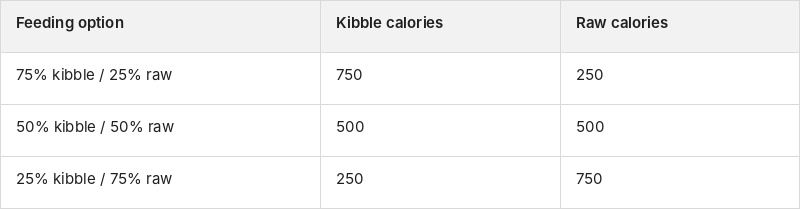
Example only. Percentages are of daily calories, not the volume of food in the bowl. Adjust portions to keep your dog at a healthy weight.
I hear all the time that raw and kibble can't be fed together because they digest at different rates. There's no good evidence for that.
We also don't have evidence that a specific amount of raw, like exactly 25%, guarantees better health. Mixed feeding is simply a practical way to add more meat-rich, minimally processed food to your dog's bowl. I recommend transitioning gradually, especially for dogs with sensitive stomachs.
What about freeze-dried raw food?
Freeze-dried raw is another convenient option, and there's no thawing involved. I recommend it for clients who travel often, have limited freezer space, or use pet sitters who aren't comfortable handling frozen raw meat.
Freeze-drying alone doesn't reliably kill pathogens, so handle it with the same care as frozen raw.
Commercial raw feeding is easier than many people expect, too. Pre-portioned meals arrive at your door, so there's nothing to weigh or mix.
I'd much rather help pet parents find something realistic than have them feel stuck because feeding 100% raw is out of their budget.
6. What I Recommend as an Integrative Veterinarian
I'm a big advocate for raw feeding.
I've seen many dogs do well after switching to properly formulated raw diets, and I value feeding high-quality animal ingredients without the cooking temperatures involved in making kibble.
I'm also picky about which raw foods I recommend. Before I suggest one, I want to know:
•Where the animal ingredients come from.
•Whether the protein and fat levels suit the individual dog.
•Who formulated the recipe.
•Whether the food is complete and balanced.
•How the company manages microbial safety.
•Whether the family can realistically feed it consistently.
Some gently cooked diets are excellent options too, and individual medical needs come first. A dog with pancreatitis may need carefully controlled fat, and a dog with kidney disease may need specific nutrient changes. Dogs with confirmed food allergies need a recipe that avoids their trigger.
I've used well-formulated raw diets for some patients with complex medical conditions, but those cases need an individualized nutrition plan built with your veterinarian.
It's not about feeding raw at all costs. It's about choosing the right food for your individual dog.
7. What I Look for in a Commercial Raw Dog Food
Raw foods vary widely in quality. Here's my checklist when I'm evaluating one:
•High-quality, identifiable animal ingredients. I want to know which proteins are used and where they come from.
•Meat-first recipes with purposeful additional ingredients. Animal ingredients should make up the base of the recipe, with other ingredients added to complete the nutrient profile.
•Complete and balanced formulation. A bowl of ground beef isn't a balanced diet! I want recipes developed by qualified nutrition experts for the dog's life stage.
•Validated food safety processes. Look for responsible sourcing, manufacturing controls, and a validated pathogen-reduction step.
•Independent microbial testing. Batch testing adds another layer of quality control, although no test can guarantee every portion is pathogen-free.
•Convenient portions and delivery. The best diet in the world only helps if you can feed it consistently.
Why I recommend We Feed Raw
We Feed Raw is one of the commercial raw food companies I recommend, and they've partnered with me on this article and video.
Their meat-first recipes are formulated by a PhD animal nutritionist and come in several animal proteins. The ingredient lists are short and simple, which helps when I'm choosing a diet for a dog with a sensitive stomach.
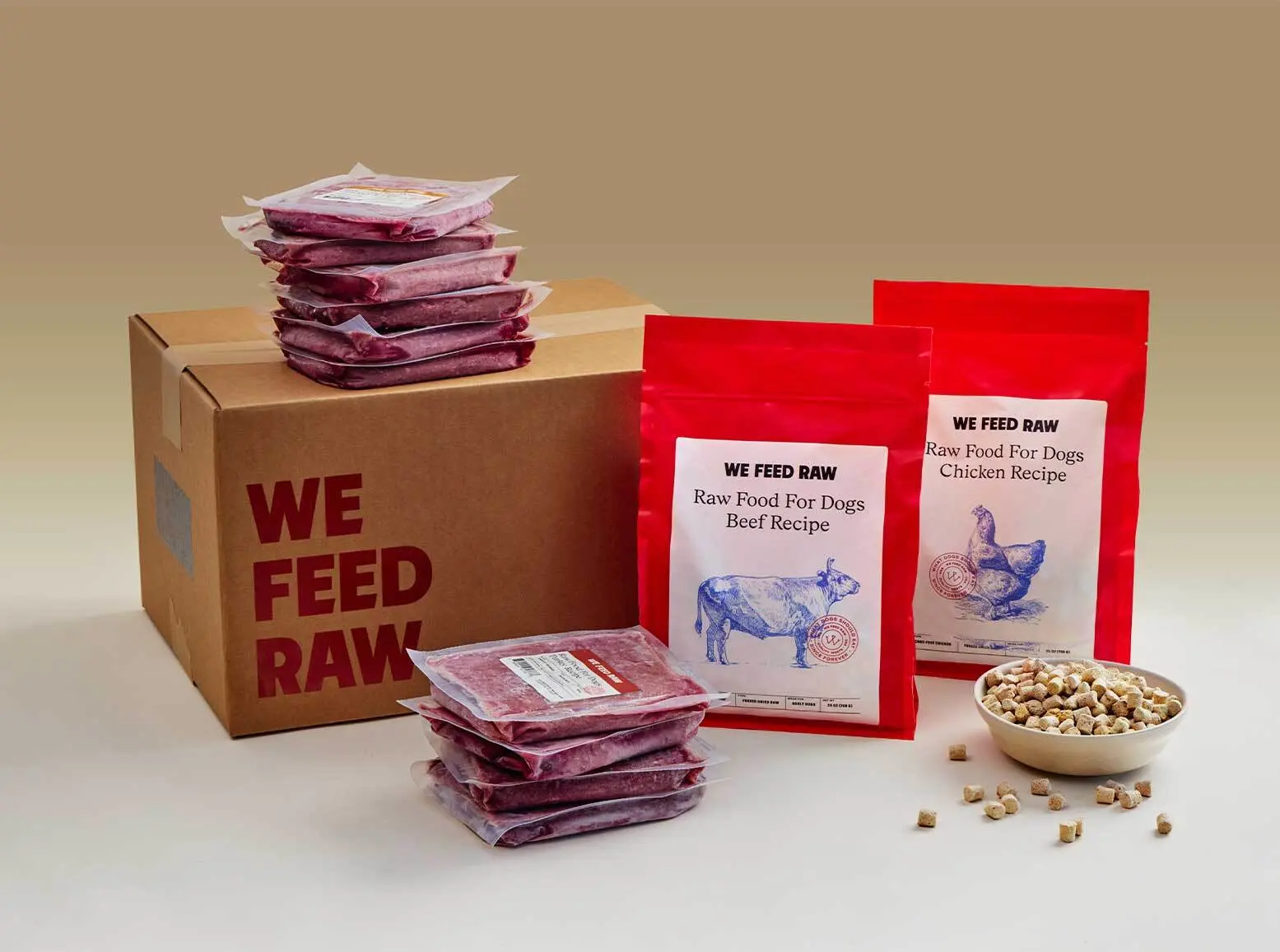
They use HPP and independent batch testing, and their meals come pre-portioned and frozen. They also make freeze-dried raw meals for travel or homes with limited freezer space.
Frequently Asked Questions About Raw vs. Fresh vs. Kibble
+Is raw dog food better than kibble?
For dogs and households where it's appropriate, I prefer a high-quality, meat-first raw diet. Raw food isn't heat-processed and holds far more moisture, and in controlled studies certain raw diets have been more digestible than the kibble tested. Kibble can still be complete and balanced, and it's cheaper and more convenient.
+Is raw dog food better than fresh cooked food?
Both can be complete and balanced. Raw food provides meat and other ingredients without cooking, while fresh food is steamed, roasted, or cooked another way. I prefer meat-first raw feeding for appropriate dogs, taking into account the recipe, your dog's health, and food safety at home.
+Is fresh dog food healthier than kibble?
Not automatically. Fresh diets contain more moisture and are often cooked more gently, and in one controlled study, the fresh diet tested was more digestible than the kibble. Meat content varies a lot between fresh brands, so read the ingredient list.
+What are the benefits of switching from kibble to raw food?
Dogs switching to raw get more moisture and usually a higher proportion of animal ingredients. Controlled studies have also found higher digestibility and smaller stools with particular raw diets compared with the kibbles tested. Those results come from specific foods, so they can't promise the same outcome for every raw diet or every dog.
+Can I mix raw dog food and kibble?
Yes, as long as both foods are complete and balanced and you follow food safety precautions. Work out portions by calories rather than volume, and transition gradually.
+Can raw food help dogs with sensitive stomachs?
Some dogs do well on an appropriately chosen raw diet, and research shows differences in digestibility and stool quality among specific raw, cooked, and extruded foods. Ongoing diarrhea, vomiting, or weight loss needs a veterinary workup to find the cause.
Final Thoughts: Why I'm an Advocate for Meat-First Raw Nutrition
Many families come to me after months of trying different foods and supplements without getting the results they wanted. Seeing those dogs finally do well after a change in nutrition is a big part of why I'm so passionate about properly formulated raw feeding.
Every dog is different, so I start with the dog in front of me and choose the best nutrition I can for them. If you can't feed 100% raw, you can still add some complete and balanced raw food to your dog's current routine.
Knowing what's in your dog's bowl is a much better starting point than trusting the marketing on the bag.
Ready to start your dog on We Feed Raw? Take our short online quiz today for your dog's personalized meal plan.
About the Author
Dr. Katie Woodley, BVSc, GDVCHM, cVMA, CVNN, is an integrative veterinarian with more than 16 years of experience and founder of The Natural Pet Doctor. She teaches pet owners and veterinary professionals evidence-informed approaches to nutrition, gut health, and integrative care.
References
•Van Rooijen C, Bosch G, van der Poel AFB, Wierenga PA, Alexander L, Hendriks WH. The Maillard reaction and pet food processing: effects on nutritive value and pet health. Nutrition Research Reviews. 2013. https://pubmed.ncbi.nlm.nih.gov/23916186/
•Sugita K, et al. Acrylamide in dog food. Fundamental Toxicological Sciences. 2021. https://doi.org/10.2131/fts.8.49
•Gerber N, Scheeder MRL, Wenk C. The influence of cooking and fat trimming on the actual nutrient intake from meat. Meat Science. 2009. https://doi.org/10.1016/j.meatsci.2008.07.012
•Geary EL, Oba PM, Templeman JR, Swanson KS. Apparent total tract nutrient digestibility of frozen raw, freeze-dried raw, fresh, and extruded dog foods and their effects on serum metabolites and fecal characteristics, metabolites, and microbiota of healthy adult dogs. Translational Animal Science. 2024;8. https://doi.org/10.1093/tas/txae163
•Algya KM, Cross TWL, Leuck KN, et al. Apparent total-tract macronutrient digestibility, serum chemistry, urinalysis, and fecal characteristics, metabolites and microbiota of adult dogs fed extruded, mildly cooked, and raw diets. Journal of Animal Science. 2018;96(9):3670–3683. https://doi.org/10.1093/jas/sky235
•Bermingham EN, et al. Key bacterial families are related to the digestion of protein and energy in dogs. PeerJ. 2017. https://doi.org/10.7717/peerj.3019
•Sandri M, et al. Raw meat based diet influences faecal microbiome and end products of fermentation in healthy dogs. BMC Veterinary Research. 2017. https://doi.org/10.1186/s12917-017-0981-z
Educational information only. This article is for general educational purposes only. It does not establish a veterinarian-client-patient relationship and is not a substitute for an examination, diagnosis, or individualized treatment plan from your pet's veterinarian.
Our Meals Change Lives.
(Theirs + Yours.)
See health improvements from our raw meals in as little as 1 week.
Find your dog's perfect plan


