




What Are the Differences Between Raw and Fresh Dog Food?
Table of Contents
- What Is Raw Dog Food?
- What Are the Key Components of a Raw Diet?
- What Is We Feed Raw’s Approach?
- What Are the Other Main Categories of Fresh Dog Food?
- How Does Raw Dog Food Compare to Other Fresh Categories?
- How Do You Choose the Best Fresh Approach for Your Dog?
- Try We Feed Raw Today
- Frequently Asked Questions
The primary difference between raw and fresh dog food is that raw food is completely uncooked to preserve live nutrients, whereas the broader category of fresh dog food can include gently cooked, air-dried, or dehydrated meals that undergo light heating or moisture removal.
While both options represent an exceptional upgrade over traditional kibble, raw food specifically isolates unheated ingredients to match a canine's ancestral biology. Navigating these categories is essential for understanding the best and worst dog food choices for your pet's long-term health and vitality.
What Is Raw Dog Food?
Raw dog food is a specific category of pet nutrition that primarily consists of completely uncooked ingredients designed to mirror the natural state of what wild canines consume.
This dietary strategy emphasizes providing pets with whole, unprocessed raw materials to maximize nutrient bioavailability and support long-term metabolic health.
What Are the Key Components of a Raw Diet?
While specific raw feeding philosophies and recipes can vary, most raw diets for dogs include some combination of:
•Muscle meat provides essential protein for building and maintaining muscle mass.
•Organ meats such as liver, kidney, and heart are nutrient powerhouses, rich in vitamins and minerals.
•Raw bones offer calcium and phosphorus for bone health and can aid in dental hygiene. It's important to note that We Feed Raw's freeze-dried recipes do not contain bones.
•Limited fruits and vegetables: While some raw feeding philosophies include fruits and vegetables, We Feed Raw's frozen raw recipes focus on animal protein sources and do not contain added fruits or vegetables. Our freeze-dried recipes, however, do include them.
According to PhD animal nutritionist Dr. Richard Patton, "Natural raw diets are low in carbs, so automatically far better aligned with the dog’s genetic machinery."
What Are the Main Raw Feeding Philosophies?
The two main raw feeding philosophies are the Prey Model and the BARF model, which differ based on whether plant matter is included alongside raw animal tissues.
Both frameworks attempt to replicate ancestral canine eating habits but achieve balance through different ingredient layouts:
•Prey Model: This approach focuses on feeding whole or minimally processed animal carcasses or parts, mimicking the proportions of a prey animal.
•BARF (Biologically Appropriate Raw Food): This model typically includes a balance of raw meat, bones, organs, fruits, and vegetables.
What Is We Feed Raw’s Approach?
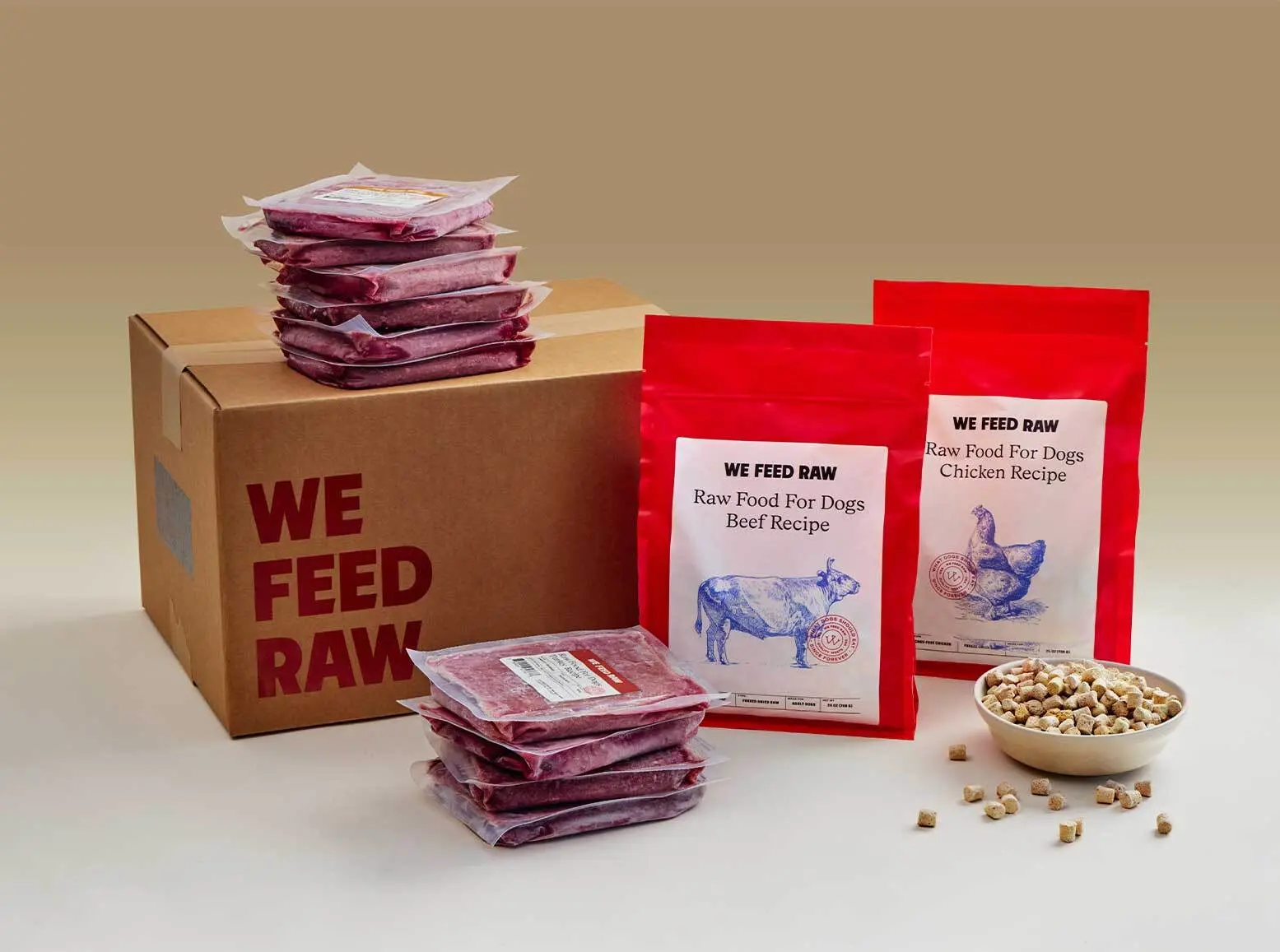
We Feed Raw offers both frozen and freeze-dried raw options. Our frozen recipes provide a complete and balanced diet made with high-quality animal proteins and are formulated for all life stages. Our freeze-dried recipes, designed for adult dogs, also offer the benefits of raw food with added convenience and include fruits and vegetables in their formulation.
Both options adhere to the fundamental principle of providing dogs with minimally processed, whole-food nutrition.
What Are the Other Main Categories of Fresh Dog Food?
The other main categories of fresh dog food include freeze-dried, gently cooked, air-dried, and dehydrated options, which vary based on moisture levels and manufacturing temperatures. These processing variations alter how the food is stored, handled, and served in your home.
What Is Freeze-Dried Raw Dog Food?
Freeze-dried raw dog food offers the nutritional advantages of a raw diet in a shelf-stable and highly convenient format. This process involves freezing raw ingredients and then removing moisture in a vacuum chamber.
The result is a lightweight food that retains much of its original nutritional value, flavor, and aroma. We Feed Raw offers freeze-dried beef and chicken recipes formulated for adult dogs.
What Is Gently Cooked Dog Food?
Gently cooked dog food involves preparing fresh, whole ingredients like meat, vegetables, and grains at controlled, low temperatures. This cooking process aims to eliminate bacteria while retaining a significant portion of the food's natural nutrients.
Gently cooked diets are often palatable and can be a good option for pet owners who prefer not to feed raw or for dogs with certain digestive sensitivities.
What Is Air-Dried Dog Food?
Air-dried dog food is produced by circulating warm air around raw ingredients to gently remove moisture over an extended period. This slow and low-temperature drying process helps to preserve the nutrients and flavors of the food without the need for high-heat cooking. Air-dried foods are typically nutrient-dense, palatable, and shelf-stable.
What Is Dehydrated Dog Food?
Dehydrated dog food also involves removing moisture from fresh ingredients, typically using low heat over a longer duration than air-drying. This process creates a shelf-stable product that needs to be rehydrated with water before feeding.
Dehydration helps to preserve many of the original nutrients, and dehydrated foods are often a more budget-friendly option within the fresh food category.
How Does Raw Dog Food Compare to Other Fresh Categories?
Raw dog food differs fundamentally from other fresh food options across processing methods, baseline costs, daily convenience, and storage flexibility. Understanding these key operational metrics helps you identify the ideal match for your routine.
Processing Methods
The most fundamental difference lies in processing. Raw dog food, by definition, is uncooked. This absence of heat treatment is a core tenet of raw feeding.
In contrast, gently cooked food undergoes a heating process, freeze-dried food undergoes moisture removal via sublimation, air-dried food is dried with warm air, and dehydrated food is dried with low heat.
Pricing and Cost Factors
The cost of raw dog food can vary. DIY raw diets might be more budget-friendly but require significant research and careful balancing. Prepared frozen raw diets, like those offered by We Feed Raw, can be comparable in price to high-quality gently cooked options.
Freeze-dried raw tends to be priced similarly to We Feed Raw's frozen options but can be more expensive from other brands due to the processing involved. Air-dried and dehydrated foods can range in price, sometimes being more budget-friendly than prepared raw options.
Kitchen Convenience
Convenience levels differ significantly. Frozen raw food requires freezer storage and thawing before feeding. Gently cooked food also needs refrigeration or freezing.
Freeze-dried raw offers the highest convenience due to its shelf-stable nature and easy preparation (just measure and serve, or rehydrate). Air-dried food is also very convenient as it's shelf-stable and ready to serve. Dehydrated food is shelf-stable but requires rehydration with water.
Refrigerator and Freezer Storage
Raw frozen dog food necessitates ample freezer space. Gently cooked food requires refrigeration or freezing. Freeze-dried, air-dried, and dehydrated foods are all shelf-stable and can be stored in a cool, dry place.
Diet Flexibility and Ratios
Raw diets, especially when focusing on single-protein sources like We Feed Raw's frozen beef, chicken, and turkey, offer significant flexibility for rotation and elimination diets. Pet owners have more control over individual ingredients if preparing raw at home (with proper knowledge).
Gently cooked, freeze-dried, air-dried, and dehydrated foods are typically formulated to be complete and balanced, offering less room for individual ingredient adjustments. We Feed Raw's frozen line, with its six protein options suitable for all life stages, provides more flexibility than our adult-only, two-protein freeze-dried line.
Health, Bioavailability, and Longevity
Proponents of raw feeding cite benefits such as improved digestion, increased energy, healthier skin and coat, and potential allergy management due to the minimally processed nature and high bioavailability of nutrients.
Gently cooked food is considered a safer option by some while still retaining more nutrients than heavily processed kibble. Freeze-dried, air-dried, and dehydrated foods also retain a significant amount of nutrients.
Per Dr. Patton, "Raw feeding isn’t hype. It’s health, backed by science, not marketing."
The long-term health impacts can vary depending on the quality and balance of each diet.
Mealtime Excitement and Palatability
Raw food, with its natural aroma and texture of fresh meat, is often highly palatable to dogs. Gently cooked food can also be appealing due to its savory smell and softer texture.
Freeze-dried food, especially when rehydrated, can be enticing. Air-dried food's jerky-like texture is enjoyed by many dogs. Dehydrated food, once rehydrated, may vary in palatability depending on the ingredients and texture.
Portion Volumes and Serving Sizes
Raw food, with its natural moisture content, typically requires feeding a larger volume compared to dry kibble. Freeze-dried and air-dried foods, having had most of their moisture removed, require smaller serving sizes by volume.
Gently cooked and rehydrated dehydrated foods will have a higher volume per serving compared to their dry states.
Readily Available Protein Varieties
Raw diets can encompass a wide variety of protein sources, especially when considering individual ingredient sourcing or prepared frozen options like We Feed Raw's diverse selection (beef, chicken, turkey, duck, venison, lamb).
Gently cooked, freeze-dried (We Feed Raw offers beef and chicken), air-dried, and dehydrated foods vary by brand, but many offer a more limited selection of protein options compared to the potential variety in raw feeding.
How Do You Choose the Best Fresh Approach for Your Dog?
Choosing the best fresh approach for your dog requires you to evaluate your pet's individual biological life stage alongside your household's daily storage capabilities and routine budget. Balancing these practical lifestyle factors with your dog's distinct health history ensures long-term feeding consistency.
Remember that "raw" is a significant and distinct category within the broader "fresh" food landscape.
Consider Your Dog's Unique Biological Needs
Think about your dog's age, breed, activity level, and any existing health conditions or sensitivities. Puppies have different nutritional requirements than senior dogs, and dogs with allergies may thrive on specific protein sources or limited-ingredient diets, which can be more easily managed with raw or certain gently cooked options.
Consider your dog's palatability preferences as well; some dogs are enthusiastic about the texture and taste of raw meat, while others might prefer the aroma and softer consistency of gently cooked food or the unique texture of rehydrated freeze-dried options.
Evaluate Your Household Lifestyle and Storage
Your daily routine, budget, and storage capabilities will also play a crucial role in your decision. If convenience and shelf stability are paramount, freeze-dried or air-dried foods might be the most practical. If you have ample freezer space and are comfortable with the thawing process, frozen raw could be a great fit.
Gently cooked options might appeal to those who prefer the idea of a home-style cooked meal for their dog but may require more frequent trips to the store or dedicated cooking time. Budget considerations can also guide your choice, as the cost per day can vary across the different fresh food categories and brands.
Ultimately, the "best" fresh approach is the one that provides your dog with optimal nutrition, aligns with their individual needs and preferences, and seamlessly integrates into your lifestyle.
Try We Feed Raw Today
Navigating the world of "fresh" dog food can feel like a journey, but understanding the distinctions between raw and other options is the first step toward making an informed choice for your furry companion.
At We Feed Raw, we believe in the power of raw food to unlock your dog's optimal health. That's why we offer both convenient freeze-dried recipes for adult dogs and a diverse range of frozen raw options formulated for all life stages. We prioritize high-quality, animal-based ingredients to provide your dog with the essential nutrients they need to thrive.
Ready to experience the We Feed Raw difference? Start your dog’s meal plan now.
Frequently Asked Questions
What exactly is the difference between raw dog food and other types of fresh dog food?
"Raw" dog food specifically refers to uncooked diets consisting primarily of meat, organs, and sometimes bones. Other "fresh" dog food categories, like gently cooked, freeze-dried raw, air-dried, and dehydrated, involve some form of processing, even if minimal.
Is a raw diet the healthiest option compared to other fresh dog food diets?
Both raw and other fresh dog food options can offer significant health benefits over highly processed kibble. Raw diets are often praised for their high nutrient bioavailability, while gently cooked options may be easier to digest for some dogs.
Freeze-dried, air-dried, and dehydrated foods offer convenience while retaining more nutrients than traditional processing methods. The "healthiest" choice depends on your dog's individual needs and your ability to properly implement the chosen diet.
How does the convenience of raw dog food compare to other fresh food choices like freeze-dried or gently cooked?
Raw dog food, particularly frozen raw, typically requires more planning due to freezer storage and the need for thawing. Gently cooked food also needs refrigeration or freezing. Freeze-dried, air-dried, and dehydrated options are generally more convenient for storage and preparation.
What are the cost considerations when choosing between a raw dog food diet and other fresh food options?
The cost can vary. DIY raw diets can be budget-friendly but require significant research and planning. Prepared frozen raw and gently cooked foods may have similar price points, while freeze-dried and air-dried options can sometimes be more expensive due to processing. At We Feed Raw, our frozen and freeze-dried raw recipes are priced the same per day.
Can I combine raw dog food with other types of fresh dog food in my dog's diet?
You can absolutely combine raw dog food with other types of fresh dog food in your dog's diet. Many pet owners find that incorporating a variety of fresh foods can offer a broader spectrum of nutrients and can be a good strategy, especially when transitioning to a raw diet or for picky eaters.
Some owners choose to feed raw at one meal and gently cooked or freeze-dried at another, while others might add a small amount of raw food as a topper to other fresh options. The key is to ensure that the overall diet is balanced over time and meets your dog's individual nutritional needs.
Our Meals Change Lives.
(Theirs + Yours.)
See health improvements from our raw meals in as little as 1 week.
Find your dog's perfect plan


