



Why Is Raw Food Good for Dogs?
Table of Contents
You may have recently realized that highly processed kibble isn’t the best thing you can feed your pup, but why is raw food good for dogs? There are lots of reasons why a raw diet for dogs is the most nutritious food option available today.
Here’s a deep dive into the benefits of a dog eating raw food. Why are raw diets good for dogs? What is the best raw food diet for dogs? Keep reading for these answers and more.
What Is a Raw Food Diet for Dogs?
A raw food diet for dogs is composed of raw muscle meat, organ meat, and bone. It’s based on the idea that modern dogs’ digestive systems are still nearly identical to their wolf ancestors. As much as we’ve changed how dogs look on the outside over many millennia, their insides have hardly changed at all.
Dogs have pointy teeth and hinged jaws designed for shredding meat rather than grinding plant matter and a short digestive tract for digesting meat rather than the long intestines required for digesting carbohydrates.
While dogs have evolved some ability to digest carbohydrates, they never developed a biological need for carbohydrates, so carb-rich, heavily processed kibble is not the best thing for them to eat (just like sugar-filled, highly processed food isn’t the best thing for humans to eat).
PhD animal nutritionist Dr. Richard Patton notes: "Natural raw diets are low in carbs, so automatically far better aligned with the dog’s genetic machinery."
Why Is Raw Food Good for Dogs?
Raw food contains all the nutrients that dogs need, without carbohydrates and filler ingredients that they don’t. As a result, it’s easier for dogs to digest and less likely to trigger allergies since raw dog food is a naturally limited-ingredient diet.
Nutritional Advantages of Raw Diets
Just like a whole-food diet is better for people than a highly processed one, raw dog food is also better for dogs. Canines are better able to digest raw dog food and use the nutrients to power their bodies—and in the process, dogs also produce less waste since their body can utilize more of the food.
Can Dogs Eat Raw Food Safely?
Yes, dogs can safely eat raw food thanks to their highly acidic stomachs and very short digestive tracts. Pathogens are unlikely to survive the stomach acid, and those that do typically don’t stay in the digestive tract long enough to reproduce and cause problems.
Having said that, We Feed Raw uses a cold-pressure process to inactivate potential pathogens, making our food safe for not only the dogs who eat it, but also for the humans who serve it (or get licked by their dogs after mealtime).
Is Raw Food Better for Dogs?
Here’s more information about why raw food is better for dogs than commercial dry or canned foods.
Comparative Analysis: Raw Diet vs. Commercial Pet Food
One study showed that frozen raw dog food is more digestible than any other type of food for dogs. Other studies have found that, compared to kibble-fed pups, raw-fed puppies are less likely to suffer from digestive issues, skin allergies, and ear infections when they grow up.
Dog Eating Raw Food: Observational Benefits
According to a survey of We Feed Raw customers:
•96% said their dogs had smaller, firmer, less smelly poops after switching to a raw diet
•88% reported healthier skin and coat
•86% of dogs showed more mealtime excitement
•87% told us their dogs had better digestion
•90% said their dogs maintained a healthy weight
•79% saw a decrease in allergy symptoms
Are Raw Diets Good for Dogs?
Yes, raw diets are excellent for dogs! A few benefits of raw dog food include fewer allergies, shinier fur, smaller poop, cleaner teeth, better weight control, stronger immune system, and improved digestion.
What Is the Best Raw Food Diet for Dogs?
While it is possible to make a raw diet for your dog by yourself, you must work with an animal nutritionist to ensure you’re giving your dog all the nutrients they need to thrive. You may need to weigh every ingredient and add supplements to each meal.
On the other hand, you could choose nutritionally complete and balanced We Feed Raw. Our 6 recipes meet AAFCO nutrition standards for dogs of all life stages, including the growth of large-breed puppies, so you can be sure your dog will get all the nutrients they need by feeding only our food with no need for weighing meat, adding supplements, or planning out a rotational feeding schedule.
Our pre-portioned patties each contain approximately 80% muscle meat (with associated connective tissue and fat), 10% organ meat, and 10% finely ground bone, along with a small amount of a vitamin and mineral mix.
Additionally, We Feed Raw uses a cold-pressure process to inactivate any potential pathogens, making our food extremely safe.
When you sign up for a We Feed Raw meal plan, we ask you a bunch of questions about your dog’s age, weight, body condition, and more so we can tell you precisely how much of our food to give your pup each day. And if you can’t afford to feed a fully raw diet, we also offer partially raw feeding plans, so you can mix our food with kibble for a more budget-friendly option.
How to Transition Your Dog to a Raw Diet
As with any diet change, you should switch your dog to a raw diet gradually, over the course of about 10 days. While some dogs can make this transition faster than that with no ill effects, dogs with a more sensitive digestive system may need a longer transition to avoid any stomach issues that can result from switching foods too quickly.
Step-by-Step Guide for Switching to Raw Food
Here’s a guide on how to change your dog to a raw diet over 10 days. You can adjust this schedule to a shorter or longer transition period based on how your pup’s stomach tolerates the changes.
Step 1: Start a Probiotic and Prebiotic (Optional)
A lifetime of kibble does nothing good for a dog’s digestive tract, so starting them on a prebiotic and probiotic combination a few days before beginning the transition to raw can help prevent tummy trouble. Continue the probiotic and prebiotic through the transition. You may be able to stop it if your pup gets through the transition without any stomach problems.
Step 2: Mix 25% Raw With 75% Old Food
For the first 3 days, give your dog 75% of the usual daily amount of their old food and feed 25% of the recommended daily dose of raw food. Assuming this goes smoothly, you can increase the amount of raw food on day 4. You may also choose to stay at this step for a few days longer to let your pup’s stomach adjust to the new food.
Step 3: Mix Half Raw and Half Old Food
Once your dog’s digestive system has adjusted to eating 25% raw, increase the amount so that you’re feeding half as much of their old food and half their eventual daily dose of raw food.
Step 4: 75% Raw and 25% Old Food
By about day 7, your pup should be able to increase to 75% of their new raw food and only 25% of their old diet.
Step 5: 100% Raw Dog Food
Hopefully, by about day 10, your dog can now eat a totally raw diet without any stomach problems.
Troubleshooting Common Issues
There are two main problems people occasionally come across when switching their dogs to a raw diet: some dogs have loose stool during the transition, and some dogs are hesitant to eat the new food because it’s so different from anything they’ve eaten before.
For Dogs With Digestive Problems
If you’ve ever gone through a period of eating lots of junk food and then trying to switch suddenly to a healthy diet rich in greens, you’ve probably experienced some digestive upset, and the same thing can happen to dogs when they switch from highly processed kibble to a raw diet.
Adding a little canned pumpkin puree to your dog’s bowl and slowing down the transition a little is often enough to get your dog over the hump, but we have tons of additional transition tips in this blog post if you need them.
For Picky Pups
Consider what a big change it is for your dog to go from eating room-temperature crunchy food to cold, wet raw food. This switch can be shocking for some dogs, making them hesitant to try the new food.
When you choose We Feed Raw, the bone fragments are small enough that you can lightly sear the patty to warm it up, and that’s often enough to convince picky pets to try raw food. As your dog gets used to the new food, you can sear it less and less until you’re serving it fully raw.
You can find more tips for transitioning picky eaters here.
Raw Feeding and Specific Health Conditions
While a raw diet is the best choice for most dogs, you may want to discuss the pros and cons of a raw diet with your veterinarian if your dog has a medical condition that may impact their ability to benefit from a raw diet.
Is Raw Dog Food Good for Dogs with Sensitivities?
Yes, raw dog food is an amazing choice for dogs with sensitivities or allergies. We Feed Raw has 6 naturally limited-ingredient recipes, 3 of which (turkey, beef, and chicken) are made from a single protein source, making it easy to feed to dogs with known or even unknown food allergies or intolerances.
Is Raw Feeding Good for Dogs with Medical Conditions?
A raw diet is good for dogs with most medical conditions, but it may not be appropriate for all dogs. For example, HUA Dalmatians may need a lower-protein diet to prevent kidney or bladder stones. When in doubt, consult your vet.
Benefits of Raw Feeding
Raw feeding has numerous benefits. It has been shown to help puppies grow up healthy, with fewer instances of chronic ear infections, skin allergies, and digestive issues than kibble-fed dogs. Raw dog food has also been shown to be more digestible than any other type of dog food.
Being more digestible, raw food helps dogs have fewer stomach problems, smaller poop, and stronger immune systems.
Raw dog food is also better for dental health since it’s free of cavity-causing carbohydrates, and it’s great for skin and coat health since it’s full of both moisture and fatty acids.
As Dr. Katie Woodley, DVM, explains: "Fresh raw meat-based diets deliver the moisture dogs need, supporting hydration in a way dry kibble cannot."
Finally, dogs LOVE the taste of raw food. They instinctively know it’s what they’re meant to eat, so most picky pups immediately dive into their bowls when switched to raw dog food.
Why Choose We Feed Raw?
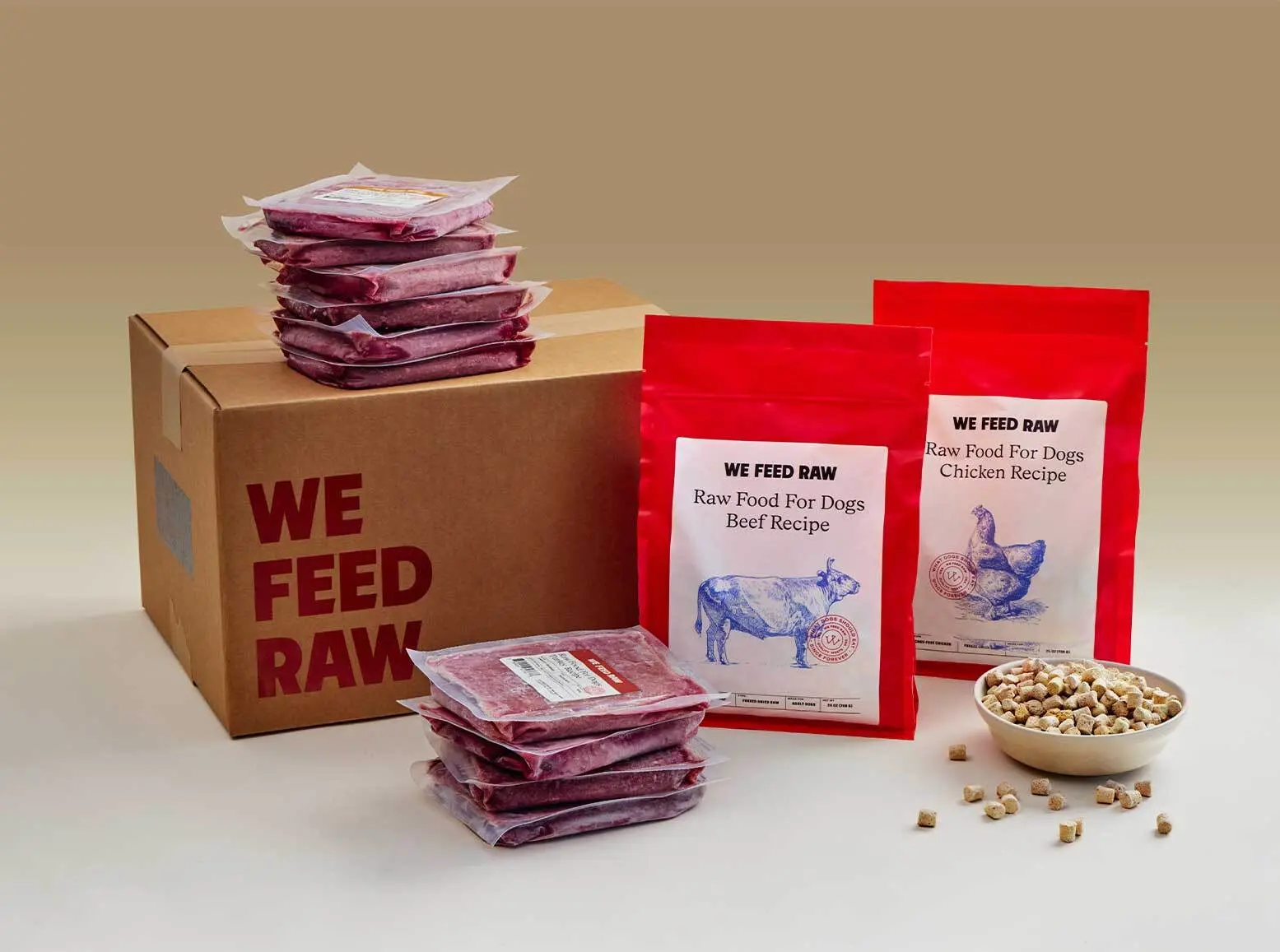
At We Feed Raw, we’re dedicated to making raw dog food as easy to feed as possible. We ship pre-portioned, nutritionally complete and balanced raw patties to your door and tell you how much to feed your dog each day. Our recipes all meet AAFCO nutritional standards for dogs of all life stages, including the growth of large-breed puppies, so you can start your dog on our food as a puppy and never have to change it.
We’re also committed to ensuring our food is safe. We use USDA-certified meat from animals raised in the United States and New Zealand, and all of our food is made and packaged in the US. Additionally, we use a cold-pressure process to inactivate potential pathogens, making our food safe to feed.
Learn more about why We Feed Raw is the best choice for your dog by clicking here, or take our quiz now to find out how much it will cost to start your dog on their life-changing raw journey.
Frequently Asked Questions (FAQs)
How does a raw diet improve a dog's skin, coat, and body odor?
A raw diet improves skin and coat health because it retains natural, delicate omega-3 fatty acids and highly bioavailable proteins that serve as essential structural building blocks. Furthermore, because low-carb raw food reduces dental decay and eliminates hard-to-digest starches, dogs experience a major reduction in both foul "doggie breath" and systemic digestive gas.
Can feeding raw meat reduce the amount of waste my dog produces?
Yes, feeding a raw diet dramatically reduces stool volume. Because canines are biologically designed to process raw meat, organs, and bone, their digestive tracts absorb nearly all of the nutrients. This elite level of bioavailability means very little waste is left over, resulting in smaller, firmer, less frequent, and significantly less smelly stools.
How does a raw food diet support a dog's immune system and allergy relief?
Since roughly 70% to 90% of a dog's immune system lives directly within their gut microbiome, improving intestinal health naturally strengthens their overall immune defenses.
A clean, raw diet stabilizes the gut and allows owners to completely avoid starchy grain fillers and artificial additives, helping to calm systemic inflammation and eliminate chronic allergy symptoms like itchy skin.
Does raw dog food help with canine weight management and hydration?
Yes, raw food naturally facilitates weight management because its high-protein, low-carbohydrate profile allows dogs to drop body fat while safely preserving lean muscle tissue.
Additionally, raw meat inherently consists of roughly 70% natural moisture, helping your dog maintain optimal cellular hydration in a way that dry kibble (which averages less than 10% moisture) simply cannot replicate.
Will feeding my dog raw food improve their dental health compared to kibble?
Yes, raw food actively supports dental hygiene. While the sticky starches and complex carbohydrates in commercial kibble leave behind a sugary residue that feeds destructive mouth bacteria and causes plaque buildup, raw dog food lacks these cavity-causing components.
Instead, fresh raw meat contains live, natural enzymes that work to keep your dog's teeth clean and gums healthy.
Our Meals Change Lives.
(Theirs + Yours.)
See health improvements from our raw meals in as little as 1 week.


