



Is Raw Dog Food Safe?
Table of Contents
- Why Do Freezing and Sourcing Fail to Kill Dangerous Pathogens?
- How Does High-Pressure Processing Protect Dogs From Pathogens Like Bird Flu and Salmonella?
- Addressing Veterinary Concerns: What Canine Biology Says About Raw Feeding
- Is It Safe for Dogs to Eat Raw Chicken? Debunking Salmonella and Bone Myths
- Can Humans Get Sick From Raw Dog Food? Understanding Bacterial Shedding
- Is Raw Dog Food Safe From Bird Flu/Avian Influenza?
- Safe Storage and Thawing: Best Practices for Raw Meals
- The Raw Food Safe-Handling Checklist for Pet Parents
- How Do You Transition Your Dog Safely to a Raw Diet?
- Upgrade Your Dog's Diet With Complete Confidence
Raw dog food is safe when it is prepared by reputable commercial manufacturers that utilize validated non-thermal pathogen reduction technologies, such as high-pressure processing, alongside expert nutritional formulation.
While pet parents and veterinarians frequently raise valid concerns about bacterial contamination, nutritional deficiencies, and bone-related hazards, these risks are primarily associated with unpasteurized grocery store meats and unbalanced homemade recipes.
When a raw diet is crafted to meet complete nutritional standards and undergoes strict safety protocols, it provides an uncompromised, species-appropriate way to nourish your dog.
Every We Feed Raw recipe is cold-pasteurized using pure cold water and high pressure to achieve a 5-log, or 99.999%, reduction in potentially harmful pathogens, making it as safe as gently cooked without using heat.
Additionally, our meats come from USDA-inspected suppliers, our meals are produced in an SQF-certified facility, and we third-party test every batch for safety before it ships.
This multi-step safety approach allows dogs to reap the full digestive, immune, and metabolic benefits of evolutionary nutrition with complete peace of mind.
Why Do Freezing and Sourcing Fail to Kill Dangerous Pathogens?
Freezing and careful meat sourcing fail to kill dangerous pathogens because sub-zero temperatures only place vegetative bacteria into a dormant state without destroying them, while standard sourcing regulations assume all raw meat will be thoroughly cooked before consumption.
Many pet parents believe that storing meat in a standard home freezer at zero degrees Fahrenheit for several weeks sterilizes the food. In reality, while freezing stops bacterial reproduction, it preserves the cellular structure of bacteria like Salmonella enterica, Escherichia coli, and Listeria monocytogenes. Once the meat thaws on a counter or in a bowl, these microbes wake up and begin multiplying immediately.
Sourcing human-grade meat from USDA-inspected suppliers is an essential first line of defense. Reputable commercial suppliers adhere to strict agricultural standards, and poultry flocks undergo rigorous inspection and disease-control protocols before meat ever arrives at a production facility.
These proactive sourcing measures significantly reduce potential pathogen exposure right from the start. However, standard USDA supermarket inspection guidelines assume meat will eventually be cooked by consumers, meaning fresh meat can still carry natural surface bacteria.
While freezing preserves freshness and supplier oversight keeps raw ingredient quality exceptionally high, freezing alone only places bacteria into dormancy rather than destroying them. For pet parents seeking the highest standard of safety, pairing premium sourcing with an active, non-thermal lethality step provides an essential extra layer of protection.
How Does High-Pressure Processing Protect Dogs From Pathogens Like Bird Flu and Salmonella?
High-pressure processing protects dogs from pathogens by using intense, non-thermal hydrostatic water pressure up to 87,000 pounds per square inch to rupture the cell walls of harmful bacteria and viruses without applying heat.
This food safety technology achieves a 5-log, or 99.999%, reduction in potentially harmful pathogens, including Salmonella, Listeria, E. coli, and enveloped viruses such as avian influenza (H5N1), making it as safe as gently cooked food without using heat.
The critical advantage of high-pressure processing lies in its ability to keep the food raw and cold throughout the entire treatment. Conventional heat cooking alters the chemical structure of animal proteins, denatures delicate amino acids like taurine, and destroys live digestive enzymes.
Because high-pressure processing relies strictly on water pressure rather than thermal heat, the food retains 100% of its unheated nutritional value, natural cellular moisture, and enzymatic activity.
Cold pasteurization is also just one part of a comprehensive safety program. We Feed Raw prepares every meal in a Safe Quality Food (SQF) Level 3 certified facility following strict Hazard Analysis Critical Control Point (HACCP) protocols.
We also maintain a strict test-and-hold process in which every batch is third-party lab tested for safety before it leaves our facility. While third-party batch testing specifically screens for common bacterial contaminants rather than avian influenza, it forms a vital pillar of our overall safety program.
Holistic veterinarian Dr. Katie Woodley emphasizes: "At We Feed Raw, safety is never an afterthought. Every meal is made with high-quality, USDA meats and handled with care using a process that protects both the nutrition and your dog’s well-being.
"As a holistic veterinarian, I feel confident recommending this food because it’s carefully sourced, safe, and biologically appropriate."
Addressing Veterinary Concerns: What Canine Biology Says About Raw Feeding
Conventional veterinary organizations, including the American Veterinary Medical Association (AVMA) and VCA Animal Hospitals, frequently caution against raw diets due to concerns about bacterial illness, nutritional inadequacy, and physical injuries from bones.
However, examining canine evolutionary biology alongside modern commercial manufacturing reveals how these concerns are resolved.
Canine Gastric Acidity and Digestive Transit
A healthy dog's gastrointestinal tract is anatomically designed to handle raw animal tissues and natural environmental microbes.
A dog's resting stomach maintains an intensely acidic pH between 1 and 2, which is comparable to battery acid. This extreme acidity swiftly breaks down dense animal muscle and bone while destroying ingested vegetative bacteria before they can pass into the intestines.
Furthermore, canines possess a short, streamlined digestive tract designed for rapid transit. Food moves through a dog's gut in approximately 4 to 8 hours, compared to 24 to 72 hours in humans. This rapid transit time gives lingering microbes very little opportunity to multiply or colonize the intestinal wall.
Complete and Balanced Nutrition vs. Homemade Guesswork
Veterinarians rightly criticize unbalanced homemade raw diets. Feeding a dog only grocery store chicken breast or ground beef causes severe deficiencies in calcium, iodine, zinc, and fat-soluble vitamins, disrupting skeletal and organ health.
At We Feed Raw, we eliminate nutritional guesswork entirely. All our recipes are formulated by a PhD animal nutritionist with decades of experience. Our five frozen recipes (chicken, beef, turkey, duck, and lamb) meet the strict nutritional levels established by the Association of American Feed Control Officials (AAFCO) for all life stages, including the growth of large-breed puppies.
Ground Bone vs. Whole Bone Hazards
Another primary veterinary concern involves fractured teeth, choking, and intestinal perforations caused by whole bones. Cooked bones become brittle and splinter into sharp points, while whole raw recreational bones can fracture carnassial teeth or cause bowel blockages in aggressive chewers.
We Feed Raw resolves this hazard by finely grinding raw bone directly into our patties. This delivers natural, bioavailable calcium and phosphorus in a soft, smooth texture that completely eliminates choking, dental damage, and digestive obstructions.
According to PhD animal nutritionist Dr. Richard Patton: "We Feed Raw is good by default because it avoids the major sin of kibble. And it is also good because it aligns with the primordial anatomy, physiology, and enzymatic machinery of all canines, domestic or wild, ancient or modern."
Is It Safe for Dogs to Eat Raw Chicken? Debunking Salmonella and Bone Myths
Raw chicken is completely safe for dogs to eat when it is commercially prepared using cold-water high-pressure processing and contains finely ground bone rather than whole cooked bones. Chicken is one of the most popular and digestible protein sources for dogs, but it is also the protein most commonly associated with consumer fears regarding Salmonella and choking.
Much of the fear surrounding chicken stems from kitchen experiences with cooked poultry. When chicken is cooked, its bones lose moisture and elasticity, becoming hard, brittle, and prone to splintering into razor-sharp fragments that can puncture a dog's mouth, throat, or stomach lining. Raw chicken bones, by contrast, are soft, pliable, and readily dissolved by canine stomach acid.
By finely grinding raw chicken meat, organs, and bone together, We Feed Raw provides the full nutritional spectrum of natural poultry without any mechanical risk.
Regarding bacteria, supermarket chicken can carry Campylobacter and Salmonella because processors assume it will be cooked.
We Feed Raw addresses this upstream by sourcing exclusively from USDA-inspected suppliers with strict flock health and disease-control programs, and downstream by utilizing high-pressure processing to achieve a 99.999% pathogen reduction.
This ensures that our single-protein chicken recipe delivers clean, highly bioavailable poultry nutrition with total peace of mind.
Can Humans Get Sick From Raw Dog Food? Understanding Bacterial Shedding
Humans can theoretically contract foodborne illnesses from unpasteurized raw dog food through cross-contamination or bacterial shedding in canine saliva and feces, but high-pressure processing and routine kitchen hygiene effectively manage this risk.
Many veterinary warnings cite scientific studies showing that dogs fed raw food can shed Salmonella in their stool. However, the majority of those studies evaluated dogs eating unpasteurized, non-HPP meat sourced directly from butcher shops or grocery stores.
When a raw diet undergoes cold pasteurization, the bacterial load is significantly reduced before the package ever arrives at your home, drastically reducing the possibility of environmental shedding.
It is also worth noting that bacterial risk is not exclusive to raw diets. Commercial dry kibble has a long history of recalls due to Salmonella contamination and toxic aflatoxins produced by moldy grains. Pet parents routinely handle kibble without realizing that dry pet food can also transmit pathogens if basic hygiene is neglected.
Feeding raw safely requires the exact same basic precautions you use when preparing a family meal:
•Wash your hands with warm water and soap for 20 seconds after handling pet food or cleaning up waste.
•Keep raw food packages separate from human foods in the refrigerator.
•Wash feeding dishes promptly after every meal.
•Pick up your dog's yard waste daily.
Is Raw Dog Food Safe From Bird Flu/Avian Influenza?
Raw dog food is safe from bird flu when commercial manufacturers combine rigorous supply-chain controls with validated non-thermal pasteurization like high-pressure processing.
While avian influenza (H5N1) primarily impacts wild birds and commercial poultry flocks, pet parents have understandably sought reassurance regarding commercial raw diets.
Because avian influenza is an enveloped virus, its outer lipid membrane is susceptible to pressure disruption. High-pressure processing applies up to 87,000 psi of hydrostatic water pressure, which deactivates the viral structure and renders it non-infectious without raising temperatures.
We Feed Raw enforces strict safety standards across all poultry-based meals. Sourcing exclusively from USDA-inspected suppliers whose flocks are actively monitored for health reduces risk before ingredients arrive at our facility.
Pairing those agricultural controls with cold-water high-pressure processing ensures that recipes containing poultry provide reliable protection against viral and bacterial concerns.
Safe Storage and Thawing: Best Practices for Raw Meals
Proper storage and handling protect the fresh quality of raw dog food and ensure your kitchen remains clean and sanitary.
Following these best practices keeps mealtime effortless and safe:
•Freezer Storage: Keep unopened raw patties stored in your freezer at 0 degrees Fahrenheit. Food can remain safely frozen for up to 6 months without losing nutritional quality.
•Refrigerator Thawing: Transfer packages from the freezer to your refrigerator roughly 24 hours before you plan to serve them. Always thaw raw food in the refrigerator rather than leaving it on a room-temperature countertop, where surface bacteria can multiply quickly.
•Shelf Life After Thawing: Once fully thawed in the refrigerator, We Feed Raw meals stay fresh for up to 4 days.
•Cold Water Thawing: If you forget to move a package to the fridge, place the sealed pack into a bowl of cold tap water. It will thaw safely within 30 to 45 minutes.
•Never Microwave Raw Food: Do not microwave raw dog food to thaw or warm it up. Microwaving cooks the finely ground bone, making it brittle and altering its molecular structure, while destroying delicate living enzymes and heat-sensitive vitamins.
•Appropriate Dishware: Serve raw meals in non-porous bowls made of stainless steel, ceramic, or glass. Avoid scratched plastic bowls, which develop microscopic crevices that trap food particles and harbor bacteria.
•Mealtime Management: Pick up and refrigerate or discard any uneaten raw food after 15 to 20 minutes to prevent the meal from sitting out at room temperature.
The Raw Food Safe-Handling Checklist for Pet Parents
To help pet parents maintain the highest level of kitchen hygiene, here is a simple checklist for daily preparation and weekly maintenance.
Daily Preparation Checklist
•Move tomorrow's meals from the freezer into the refrigerator 24 hours in advance.
•Wash hands thoroughly with soap and warm water for at least 20 seconds before opening the package.
•Open the easy-peel packaging and empty the meal directly into a clean, non-porous dish.
•Wash your hands again immediately after serving the food.
•Pick up the bowl after 15 to 20 minutes once your dog finishes eating.
•Wash the feeding bowl and clean the prep counter using warm, soapy water or a pet-safe sanitizing spray.
Weekly Best Practices
•Run your dog's stainless steel, ceramic, or glass bowls through the dishwasher on a high-heat sanitizing cycle.
•Check your refrigerator thermometer to verify the temperature remains at or below 40 degrees Fahrenheit.
•Practice a first-in, first-out rotation system in your freezer, placing newly delivered packages behind older ones.
How Do You Transition Your Dog Safely to a Raw Diet?
You transition your dog safely to a raw diet by implementing a gradual 10-day schedule that allows your dog's digestive enzymes, stomach acid, and gut microbiome to adapt smoothly without gastrointestinal distress.
Moving too fast can overwhelm a digestive tract accustomed to high-carbohydrate dry pellets, leading to temporary loose stools.
A standard safe transition schedule follows a progressive daily breakdown:
•Days 1 through 3: Serve 25% We Feed Raw mixed alongside 75% of your dog's old dry kibble
•Days 4 through 6: Adjust the ratio to a balanced 50% split of raw food and old kibble
•Days 7 through 9: Increase the raw portion to 75% while reducing the old food to just 25%
•Day 10 and beyond: Transition fully to 100% complete and balanced raw nutrition
During the first few weeks, you will likely notice physical changes in your dog's stool. Because raw food is free from indigestible grain fillers and highly bioavailable, your dog will absorb almost all of it, resulting in significantly smaller, firmer, and less frequent bowel movements. Stools may also appear lighter in color due to the natural bone minerals.
If your dog has an exceptionally sensitive stomach and experiences mild loose stools during the switch, simply slow down the schedule by remaining at your current ratio for an extra two to three days, or mix in one to two tablespoons of pure canned pumpkin puree to add gentle soluble fiber.
Upgrade Your Dog's Diet With Complete Confidence
Raw feeding provides the gold standard in canine nutrition, restoring gut health, reducing inflammation, building lean muscle, and providing sustained daily energy.
By pairing ancestral nutrition with USDA-inspected sourcing, SQF Level 3 manufacturing, and cold-water pasteurization, We Feed Raw resolves the pathogen concerns, bone hazards, and nutritional imbalances of DIY diets without heat damage.
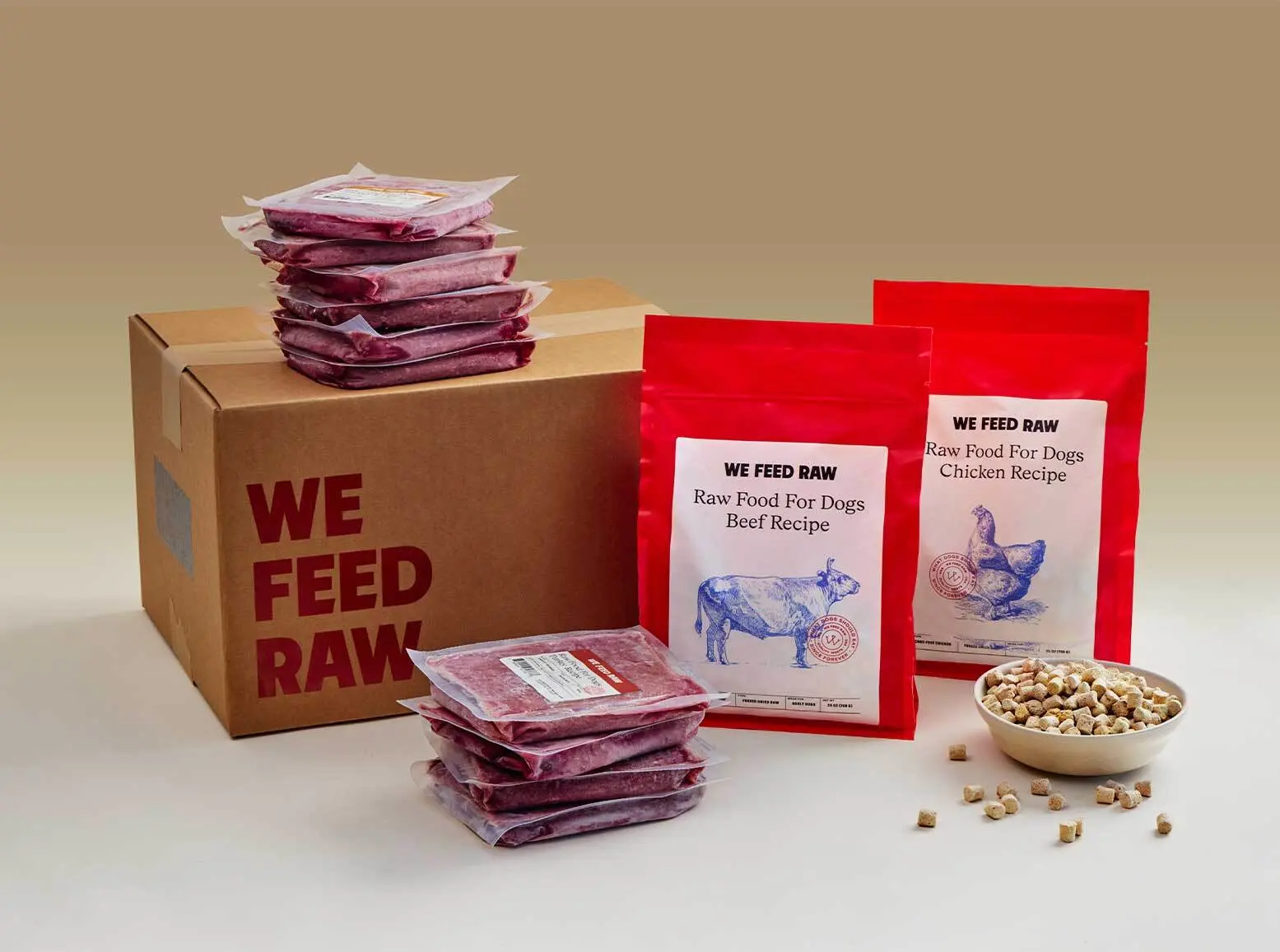
Our USDA-inspected frozen raw recipes are crafted by a PhD animal nutritionist to be complete and balanced for all life stages, including puppies. We offer five frozen recipes alongside shelf-stable freeze-dried recipes for adult dogs.
Our pure single-protein formulas (chicken, beef, and turkey) make feeding simple for dogs with specific sensitivities, while our multi-protein recipes (duck, which contains turkey, and lamb, which contains beef) offer nutritious variety.
Feeding your dog the biologically appropriate food they were born to eat does not have to come with worry or kitchen mess. Take our quick online quiz today to build a personalized, pre-portioned meal plan and give your dog the benefits of safe, raw nutrition.
Our Meals Change Lives.
(Theirs + Yours.)
See health improvements from our raw meals in as little as 1 week.
Find your dog's perfect plan


