





What's the Best Dog Food for a Sensitive Stomach?
Table of Contents
- Comparative Analysis: Food Types and Sensitive Stomachs
- Ingredients That Can Affect Sensitive Stomachs
- Understanding the Root Cause: What Is Causing Your Dog’s Sensitive Stomach?
- Dog Life Stages and Sensitive Stomach Diets
- Transitioning to a Dog Food That Is Better for Sensitive Stomachs
- Best Dog Food for Sensitive Stomachs
- Serving Up Smiles and Tail Wags With Each Delivery
- FAQs
Finding the best dog food for a sensitive stomach can feel like an endless cycle of trial and error, but the solution often lies in understanding your dog's biology. If your pup experiences frequent gas, soft stools, or vomiting, their digestive system is likely struggling with their current food. Switching to a high-quality, species-appropriate diet is the most effective way to eliminate digestive upset and provide lasting relief.
At We Feed Raw, we believe the definitive answer lies in a raw food diet for dogs. A raw diet provides maximum nutrition with minimum ingredients, allowing the canine gut to rest, heal, and function optimally.
This guide will break down how different types of dog food impact digestion and why moving away from highly processed options is the key to helping your pup thrive.
Comparative Analysis: Food Types and Sensitive Stomachs
When looking for the best dog food for a sensitive stomach, understanding the nutritional profile and processing method of each food type is crucial. Highly processed foods contain structural elements that often exacerbate digestive issues.
1. Traditional Kibble (Processed Dry Food)
Kibble is the least species-appropriate diet, primarily because it relies on high-heat extrusion and high carbohydrate content. The average kibble contains about 30–60% carbohydrates from sources like corn, wheat, and potatoes.
These high levels of starches are difficult for a carnivorous dog to process efficiently. This inefficiency often leads to fermentation, excessive gas, and chronic gut inflammation.
Kibble's impact on a sensitive stomach:
•Leads to fermentation and excessive gas
•Causes chronic gut inflammation due to high starch content
•Provides proteins that are structurally altered and harder to absorb
2. Canned Food (Wet Food)
Canned food offers a mild benefit due to its high moisture content, which is easier on the digestive tract than dry kibble. However, canned food undergoes intense heat sterilization during the canning process.
This sterilization destroys essential nutrients and denatures proteins, which affects digestibility. The food often contains gums, thickeners, or gelling agents to achieve its texture, and these can sometimes irritate an already sensitive gut.
Canned food's effect on a sensitive stomach:
•Undergoes intense heat processing, destroying natural enzymes
•May contain gums or thickeners that irritate the gut lining
•Provides proteins that are less usable due to heat alteration
3. Fresh/Cooked Food
Fresh or gently cooked food is a step up because it contains whole, recognizable ingredients. It avoids the extreme heat and pressure of kibble extrusion.
The primary drawback of this approach is the act of cooking itself. Cooking destroys vital enzymes that naturally aid digestion, forcing the dog's body to work harder to break down nutrients.
How fresh food affects a sensitive stomach:
•Destroys vital digestive enzymes due to cooking
•Reduces the bioavailability of certain heat-sensitive nutrients
•Is generally easier to process than kibble but harder than raw food
4. Raw Food (The Gold Standard)
Raw food is the gold standard because it is minimally processed and aligns perfectly with a dog’s carnivorous biology. Raw diets are naturally low in carbohydrates and high in animal protein.
Our approach provides maximum nutrition with minimum ingredients, allowing the canine gut to rest, heal, and function optimally. This eliminates the fermenting starches and processed fillers that cause common digestive upset.
Raw food's impact on a sensitive stomach:
•Contains zero unnecessary carbohydrates, eliminating fermentation and gas
•Preserves 100% of natural enzymes that actively aid digestion
•Provides nutrients in their most bioavailable, unaltered state
•Offers a limited-ingredient profile, which is perfect for identifying and removing food triggers
Ingredients That Can Affect Sensitive Stomachs
However you feed your dog, you should always read dog food labels to ensure you're providing your dog with the highest-quality ingredients. Do your research on the company that made the food and any ingredients you're unfamiliar with.
Although the best dog food for a sensitive stomach may vary slightly depending on what's causing the issues, the best food for sensitive stomach dogs all have a few things in common.
Protein for Dogs With Sensitive Stomachs
All dogs, regardless of whether they have a sensitive stomach or not, do best on a diet that's rich in animal protein. There is such a thing as too much protein, however.
In addition to monitoring the amount of protein you give your pup, know that different protein sources can affect dogs in varying ways. If your pup shows signs of an upset stomach after eating a certain type of protein, try a different source.
Raw protein is easier for dogs to digest because it has not been denatured (altered) by heat.
Carbohydrates for Dogs With Sensitive Stomachs
While dogs have developed some ability to digest carbohydrates, they don't need carbohydrates in their daily diet. In fact, the lower the percentage of carbohydrates in your pup's food, the more likely they are to be able to digest it properly.
While kibble is an affordable dog food option, and some varieties are gentler on sensitive stomachs, the average kibble contains about 60% carbohydrates, while raw meat is completely free of any added carbs.
Fat for Dogs With Sensitive Stomachs
While some dogs may not react well to a high-fat diet—for example, pups who have had pancreatitis—fat is not problematic for most dogs. While some pet owners may worry about fat content impacting their dog's weight, carbs are actually a bigger contributor to obesity and stomach issues than fat is.
Furthermore, the right levels and ratios of omega-3 fatty acids are essential for dog health, just like they are for humans. Typically, commercial kibble is high in omega-6 fatty acids and low in omega-3s—a ratio that can exacerbate inflammation and upset stomach, while a raw meat-based diet and some fresh diets are rich in omega-3 fatty acids.
Dog Food Fillers and Sensitive Stomach Symptoms
Dog food brands sometimes mix low-quality ingredients and artificial additives into their products that not only provide no nutritional value for your pup but can actually cause an allergic reaction in the form of a sensitive stomach.
Highly refined grains—including wheat, corn, and soy—are commonly found in ultra-processed kibble and can be more difficult for a dog to digest. Your pup could even be gluten intolerant, so you must know what they're digesting and how they might respond to unknown fillers.
Probiotics and Fiber for Dogs With Sensitive Stomachs
Much like people, dogs need a good source of probiotics and fiber to support gut health, and ensuring your dog gets enough of both helps lower their risk of a sensitive stomach.
In fact, high-quality canine supplements like probiotics and digestive enzymes can help balance gut bacteria and improve digestion and skin health.
Fiber, on the other hand, assists with regulating bowel movements and can help prevent (or treat) both diarrhea and constipation. If you believe your pup needs more fiber in their daily diet, 100% pure pumpkin puree is a great source—just make sure to purchase 100% pure pumpkin puree and not pumpkin pie filling.
Understanding the Root Cause: What Is Causing Your Dog’s Sensitive Stomach?
If your dog is vomiting, having diarrhea, showing a decrease in appetite, or not acting like themselves, they may be suffering from an upset stomach. Getting to the root of the problem is the most important step to finding the best dog food for a sensitive stomach.
Consult Your Veterinarian to Rule Out Serious Health Concerns
Your dog’s veterinarian may want to run tests to detect or rule out a potentially serious condition, such as a parasite or infection.
Try an Elimination Diet for Your Dog
Once any serious underlying health issues are ruled out, your vet may suggest conducting an elimination diet at home by removing all ingredients that may cause your pup to have an upset stomach. One by one, you can then reintroduce each food source to see if your dog has a negative reaction.
Keep a food journal to track what your dog eats and how they respond. This will help you refer to what has and hasn’t worked for your pup as you work to discover the cause of their sensitive stomach.
Elimination diets help identify existing food allergies or sensitivities. Allergies can present themselves in many ways, and your dog may be allergic to any number of ingredients in their current diet.
Dog Life Stages and Sensitive Stomach Diets
Senior dogs and puppies have different needs than adult dogs, so they may need other options when you’re searching for the best food for dogs with sensitive stomachs.
Senior Dogs
Senior dogs tend to be less active than younger dogs, so they typically require fewer calories and much less carbohydrates. Therefore, when choosing dog food for your senior dog with a sensitive stomach, make sure their diet is rich in animal protein and low in obesity-causing carbohydrates.
If you need help determining how much raw food your senior pup needs each day to maintain a healthy weight or lose weight, use our quiz to build your pup’s meal plan.
Puppies
Puppies have different nutritional requirements than adult dogs, which is why many dog foods are labeled as being nutritionally complete specifically for puppies or for adult dogs. Be sure to select a dog food or diet for your puppy that is nutritionally complete for their life stage.
If you’re planning on feeding a raw diet, this may be simpler. We Feed Raw's frozen raw food meets AAFCO nutrition requirements for dogs of all life stages, including the growth of large-breed puppies.
Please note that our freeze-dried recipes are formulated for adult dogs only.
Transitioning to a Dog Food That Is Better for Sensitive Stomachs
Once you’ve identified any food triggers or decided on an appropriate diet for your dog’s sensitive stomach, take it slow when transitioning your dog to the new food:
•Start Slow: Start by mixing only 25% of the new food with 75% of the old food for 3-5 days.
•Gradual Increase: In the days following, gradually increase the new food amount by 25% every few days.
•Monitor: If your dog shows signs of digestive upset (like loose stools), slow the transition or adjust the portions. An abrupt alteration in their diet could cause them discomfort.
•Allow Adjustment: Once your dog is fully transitioned, give them at least 2-3 weeks to adjust before making any other changes. Even if their new diet is right for them, dogs' digestive systems need time to adjust.
According to holistic veterinarian Dr. Katie Woodley, DVM, when dogs transition from kibble to a fresh or raw diet, “Most pet owners notice changes within one to two weeks. The first improvements are often in digestion—smaller, firmer stools and less gas—because raw food is easier to digest.”
Best Dog Food for Sensitive Stomachs
In short, the best dog food for sensitive stomachs is one with minimal ingredients and maximum nutrition. Ideally, it is composed of raw animal protein and lacks any additives, filler ingredients, or artificial colors or flavors.
Raw Diets: The Gold Standard
Raw diets are the gold standard for sensitive stomachs because they are typically made from only one or two animal protein sources ,and are paired with flaxseed, vitamins, minerals, and natural enzymes providing a complete and balanced diet.
“A raw diet is the most natural and biologically appropriate way to feed dogs,” says Dr. Woodley. “Their digestive systems are designed to handle raw meat, organs, and bones.
"Raw food provides highly bioavailable nutrients, which means your dog’s body can absorb and use them more effectively. It also avoids the highly processed ingredients, fillers, and artificial additives found in kibble, which can contribute to inflammation, digestive issues, and long-term health problems.”
However, if an all-raw diet isn’t feasible for your pup, some alternatives may help ease some of their sensitive stomach symptoms.
Dog Food Toppers and Mix-Ins for Sensitive Stomachs
Start small—you don’t have to go all in on raw dog food overnight. Begin by adding a small amount of raw food as a topper or mix-in with your dog’s current food. You can also use freeze-dried raw food as a topper for extra convenience.
Remember that not all raw food is created equal. Choosing a balanced, high-quality raw food like We Feed Raw ensures your dog is getting all the essential nutrients they need.
Supplements for Dogs With Sensitive Stomachs
Even if adding any raw food to your dog’s diet isn't feasible, adding probiotics, prebiotics (fiber), and extra nutrients to your dog’s diet will help support their gut health. This could mean a high-quality probiotic supplement, canned pumpkin, or bone broth, which provides easily digestible nutrients and supports gut lining health.
When shopping for supplements, keep in mind that the more ingredients there are in a treat or supplement, the more likely it is that one or more of those ingredients will bother your pup’s system. Just like you would with your dog’s regular food, read supplement and treat labels to make sure you recognize the ingredients listed.
Serving Up Smiles and Tail Wags With Each Delivery
At We Feed Raw, our raw dog food provides the peace of mind that your pup is as happy and healthy as possible, living life to their fullest potential every day, thanks to our PhD nutritionist-formulated meals.
Our subscription-based raw meal plans could be the key ingredient to reducing your dog’s gastrointestinal distress and picky eating.
Ready to try something new today? We know your dog is! Although we haven’t officially met just yet, every relationship at We Feed Raw begins by simply sharing your pup’s name.
FAQs
Aside from changing their diet, what else can I do to ease my dog's sensitive stomach?
Try feeding your dog smaller, more frequent meals. Large meals can overwhelm a sensitive stomach. All dogs are different, but many dogs with sensitive stomachs do best when they are fed 2-3 times per day.
While some dogs get the “hunger pukes” when they’re only fed once a day, other pups may struggle to digest a whole day’s worth of food in a single meal. You might try experimenting with different numbers of meals per day or meal times to find a schedule your pooch’s digestive tract does best on.
Stress can also trigger digestive issues. Try to keep feeding times consistent and create a calm eating environment.
Is it safe to mix raw food and kibble?
Yes, it’s safe to mix raw and kibble! While some people worry that mixing the two can cause digestive issues, research shows that dogs are highly adaptable, and some raw is always better than none.
How does raw dog food delivery work?
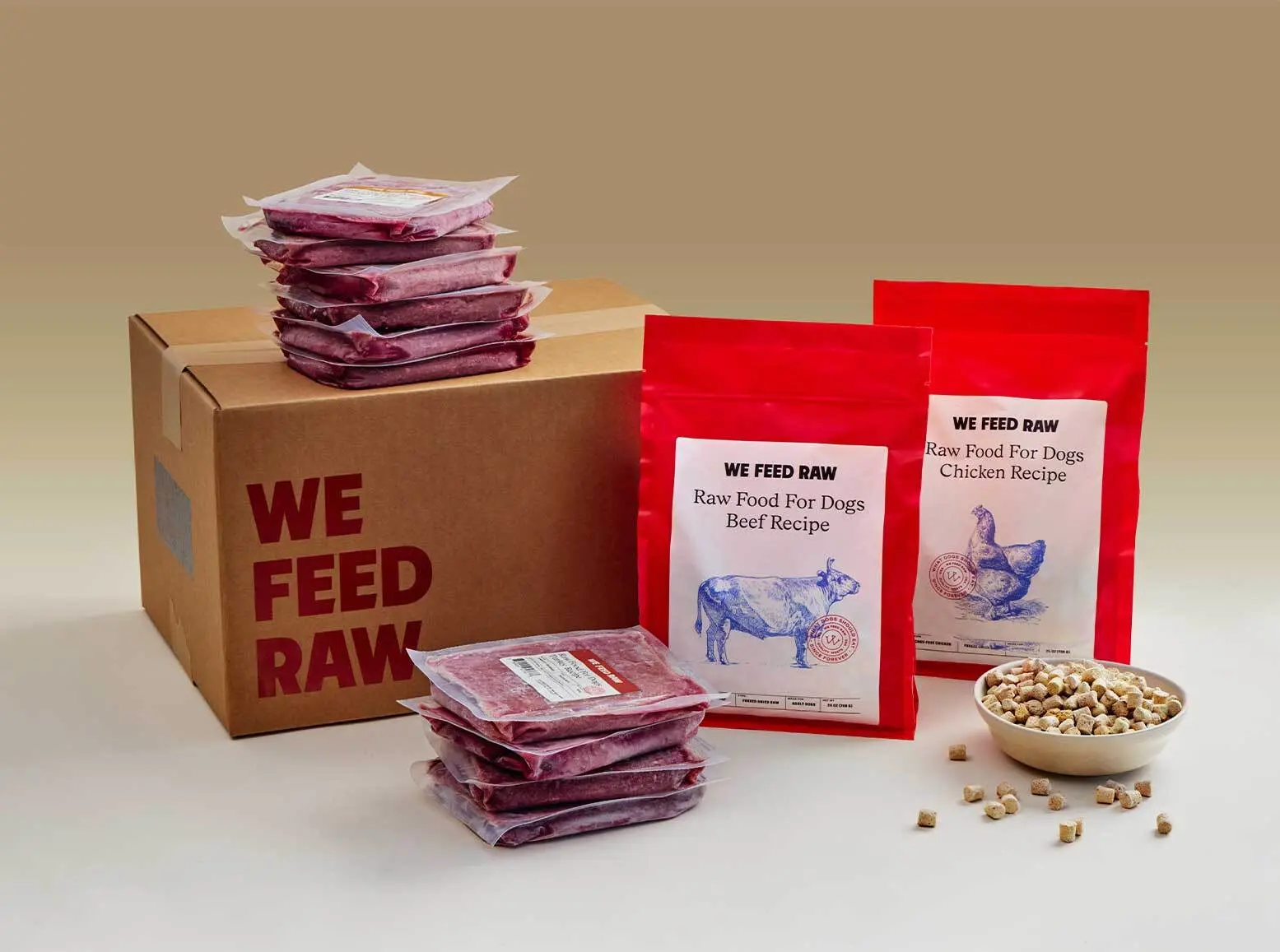
We Feed Raw delivers frozen pre-portioned meals to your preferred destination. Upon delivery, you put the food in your freezer and thaw and serve it as needed. We tell you how much to feed your pup per day and guide you through gradually transitioning them from their old food to their new diet over 10 days to avoid causing stomach upset.
For adult dogs, we also offer freeze-dried raw dog food that requires no refrigeration or freezing and may also benefit dogs with sensitive stomachs.
How quickly will my dog see relief from switching to a raw diet?
Most pet owners notice changes within one to two weeks. The first improvements are often in digestion—smaller, firmer stools and less gas—because raw food is easier to digest. Over the next few weeks, you’ll likely notice a shinier coat, healthier skin, and increased energy.
Over time, many dogs experience better muscle tone, reduced inflammation, and improved dental health. Long-term, raw feeding supports a stronger immune system and can reduce the risk of chronic diseases.
Our Meals Change Lives.
(Theirs + Yours.)
See health improvements from our raw meals in as little as 1 week.


