




A Beginner's Guide to Raw Dog Food: Benefits, Safety, and Transition Tips
Table of Contents
- What Is a Raw Dog Food Diet?
- What Are the Main Benefits of Raw Feeding?
- Is Raw Dog Food Safe for My Household?
- How Much Raw Food Should I Feed My Dog?
- How Do I Transition My Dog to Raw Food?
- Is Feeding Raw Convenient for Busy Owners?
- Why Trust PhD Animal Nutritionist-Formulated Meals?
- What Do Veterinarians Say about Raw Feeding?
- Ready to Start Your Dog's Raw Journey?
- Frequently Asked Questions
Whether you already know that raw dog food is cheaper than vet bills for chronic conditions or you are entirely new to the concept of a raw diet for dogs, this guide answers all your questions about raw feeding.
Transitioning to a species-appropriate raw diet is the single most impactful choice you can make for your dog's long-term health and vitality. Let’s get into everything you need to know about raw dog food.
What Is a Raw Dog Food Diet?
A raw dog food diet consists of uncooked, minimally processed ingredients like muscle meat, organ meat, and finely ground bone or non-GMO fruits and veggies. This diet mimics what dogs evolved to eat in the wild, providing superior nutrient bioavailability and live enzymes.
Modern raw feeding has moved away from the guesswork of DIY diets and toward scientifically balanced, PhD animal nutritionist-formulated meals.
Unlike kibble, which is cooked at extreme temperatures that can denature proteins, raw food remains in its most natural state. This ensures that your dog receives the maximum nutritional value from every bite.
What Are the Main Benefits of Raw Feeding?
The benefits of a raw diet include improved digestion, healthier skin and coats, smaller stools, and increased energy.
Because raw food is highly digestible and free from starchy fillers, it reduces systemic inflammation and supports the immune system. Many owners also report that their dogs have cleaner teeth and fresher breath after making the switch.
Does Research Support Raw Food for Dogs?
Research continues to validate the benefits of raw dog food.
If you are looking for evidence-based reasons to start, consider these significant studies:
•Reduction in allergies: A study published in the Wiley Online Library found that puppies fed a raw diet were less likely to suffer from skin allergies as adults.
•Fewer ear infections: Research in Frontiers in Veterinary Science showed that raw-fed puppies had a lower incidence of chronic ear infections later in life.
•Superior digestibility: According to a study published in the Journal of Animal Science, raw and fresh foods significantly outperform extruded kibble in nutrient absorption and digestibility.
•Disease prevention: The DogRisk research group at the University of Helsinki has spent years documenting how fresh food can reduce the risk of chronic illness in dogs.
Is Raw Dog Food Safe for My Household?
Yes, raw dog food is safe for your household when it is sourced and processed correctly.
We Feed Raw uses high-pressure processing (HPP) as a form of cold-pressure pasteurization. This scientifically validated method inactivates pathogens like Salmonella and Listeria without heat, making our food as safe as gently cooked alternatives.
Safety is often the primary concern for beginners, but choosing a brand that prioritizes a "kill step" like HPP eliminates the risks associated with raw meat. By neutralizing harmful bacteria while the food is still in its final packaging, we ensure that your kitchen remains a safe environment while your dog enjoys 100% raw nutrition.
How Do I Safely Thaw and Store Raw Food?
The greatest risk of contamination comes from mishandling food during thawing.
Here are some tips for safely handling your dog's raw diet:
•Thaw in the Refrigerator: Always thaw raw patties or portions in the refrigerator, preferably in a sealed, non-porous container (like glass or stainless steel). Never thaw raw food on the kitchen counter or at room temperature.
•Prevent Cross-Contamination: Store thawing raw meat on the bottom shelf of your refrigerator to prevent any potential drips from contaminating human foods stored below.
•Storage Time: Once thawed, raw food should be fed within 2–3 days. Any uneaten food should be discarded promptly and should not be left out for long periods.
•Designated Tools: Use separate utensils, cutting boards, and dishes when handling raw food. Wash these items immediately after use.
How Do I Maintain Kitchen and Feeding Hygiene?
Cleaning the feeding area is just as important as cleaning the prep area:
•Wash Hands: Always wash your hands thoroughly with soap and warm water for at least 20 seconds before and after handling raw food.
•Clean Surfaces: Sanitize all countertops, sinks, and preparation areas that come into contact with the raw food using hot, soapy water or a disinfectant.
•Clean Bowls: Wash your dog's food bowl thoroughly with hot, soapy water after every raw meal. Stainless steel, ceramic, and glass bowls are easier to sanitize than porous plastic bowls.
How Much Raw Food Should I Feed My Dog?
A wide variety of factors go into determining how much raw food to feed on a raw dog diet, such as their age, breed, and activity level. However, a general rule of thumb is to feed 2-3% of their body weight each day.
That looks like:
•100-lb dog: 2-3 pounds of food per day
•50-lb dog: 1-1.5 pounds of food per day
•25-lb dog: 0.5-0.75 pounds of food per day
When feeding dogs a raw diet, it’s sometimes easier (especially with smaller dogs) to convert their weight to ounces. Simply multiply your dog’s weight by 16 to get their weight in ounces; then use that number to find out how many ounces of raw food they should get per day.
For example:
•A 25-lb dog weighs 400 oz and should get 8-12 ounces of food per day
•A 15-lb dog weighs 240 oz and should get 4.8-7.2 ounces of food per day
•An 8-lb dog weighs 128 oz and should get 2.56-3.84 ounces of food per day
Keep in mind that dogs who are younger, more active, or need to gain some weight may need more than 3% of their weight in raw food per day, while senior, inactive, or obese dogs may need less than 2% of their weight in raw food per day.
We Feed Raw makes it easy. When you take our quiz and tell us about your pup, we tell you exactly how many ounces of We Feed Raw you should feed your dog each day. You decide how many meals to split that amount into.
How Do I Transition My Dog to Raw Food?
You should transition your dog to raw food gradually over 7 to 10 days to allow their gut microbiome to adjust. Start by mixing a small amount of raw food with their current diet and gradually increase the ratio of raw while decreasing the previous diet until the transition is complete.
A typical 10-day transition schedule looks like this:
•Days 1 to 3: 25% raw mixed with 75% current food
•Days 4 to 6: 50% raw mixed with 50% current food
•Days 7 to 9: 75% raw mixed with 25% current food
•Day 10: 100% raw
During this time, pay close attention to your dog's stools. It is normal to see some variation in consistency as their body adjusts to a more moisture-rich, starch-free diet.
Is Feeding Raw Convenient for Busy Owners?
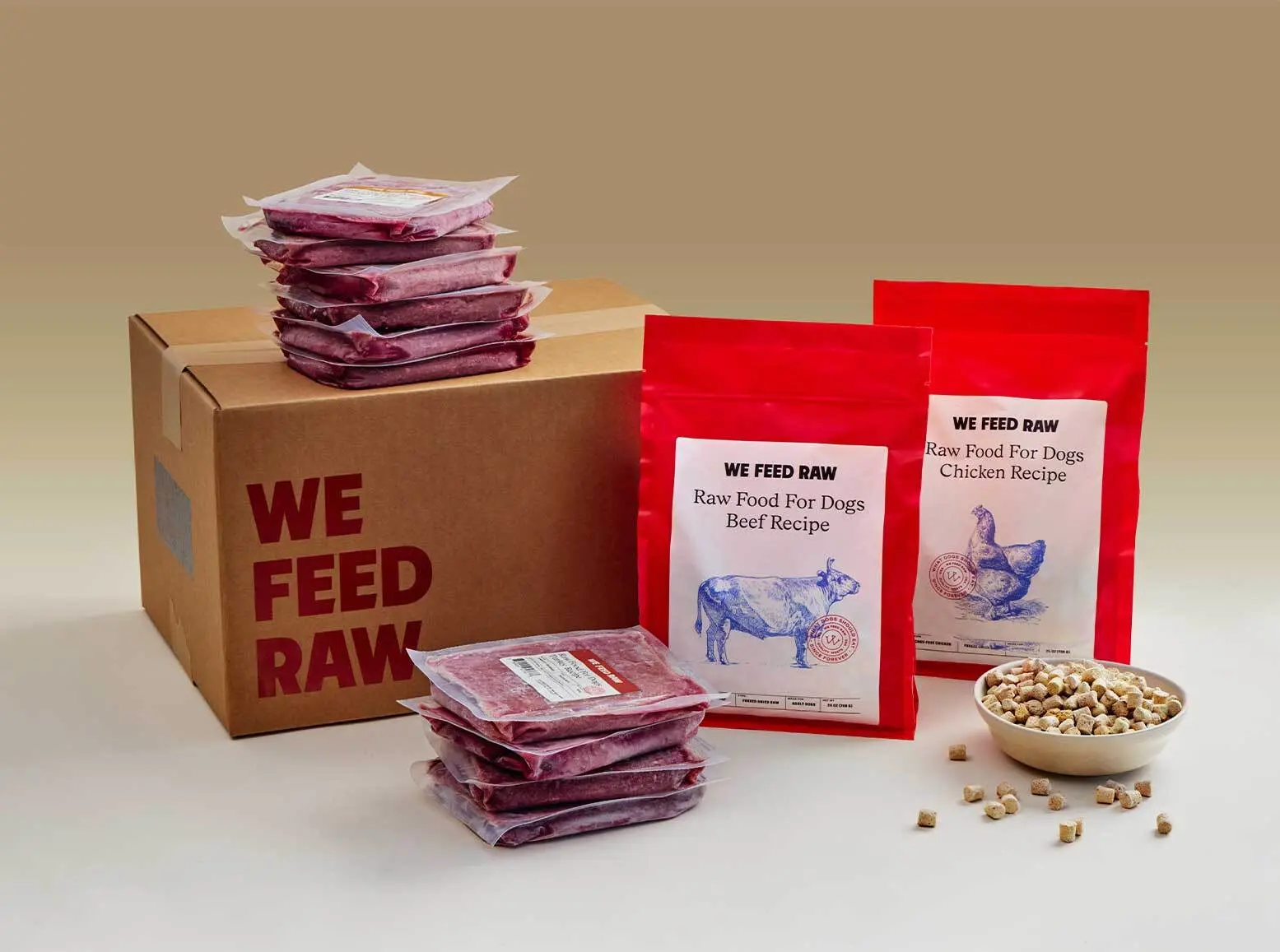
Feeding raw can be very convenient when you utilize subscription services and pre-portioned frozen patties or freeze-dried raw.
While many people believe raw feeding requires hours of meal prep, We Feed Raw provides easy-peel packaging that makes serving as simple as peeling back a film.
For adult dogs, our freeze-dried recipes offer the ultimate "scoop and serve" convenience with zero thawing required.
Our freeze-dried raw food for adult dogs is shelf-stable and perfect for travel or those without extra freezer space. It provides the same high-quality nutrition and HPP safety as our frozen line, proving that you do not have to sacrifice convenience to give your dog a world-class diet.
Why Trust PhD Animal Nutritionist-Formulated Meals?
You should trust PhD animal nutritionist-formulated meals because they ensure your dog is receiving a perfectly balanced ratio of vitamins, minerals, and amino acids.
Every recipe at We Feed Raw is formulated by a PhD animal nutritionist with over 30 years of experience, ensuring your dog avoids long-term nutritional deficiencies.
While veterinarians are experts in veterinary medicine and diagnosis, PhD nutritionists are specialists in how the body utilizes nutrients for preventive wellness. This expertise is what allows us to provide a "nutritional insurance policy" for your dog's health.
What Do Veterinarians Say about Raw Feeding?
Many modern veterinarians now endorse and recommend raw feeding for its profound impact on gut health and longevity.
If you are curious what vets say about raw dog food, you will find that many professionals have seen significant improvements in their patients after switching to a raw diet.
Experts in the field are sharing their success stories, discussing how raw feeding supports gut health and why they now recommend a raw food diet for dogs. These professionals recognize that eliminating processed starches and adding bioavailable protein form the foundation of canine vitality.
Ready to Start Your Dog's Raw Journey?
Starting a raw diet does not have to be a guessing game. By choosing a PhD animal nutritionist-formulated, HPP-safe, and convenient meal plan, you are giving your dog the best chance at a long and healthy life.
Whether you choose our frozen patties or our shelf-stable freeze-dried line, the benefits will be visible in your dog's shiny coat, bright eyes, and stable energy.
Take our quiz today to get a customized meal plan tailored to your dog's specific needs and join the thousands of pet parents who have seen the raw difference firsthand.
Frequently Asked Questions
Is raw dog food safe for puppies?
Yes. Our frozen raw patties are formulated for all life stages, including the growth of large breed puppies. Because they are cold-pressure pasteurized for safety, they provide the safe, balanced foundation your puppy needs to develop a strong immune system and healthy joints.
Why does my dog drink less water on raw?
Kibble is a dry product that leaves dogs in a state of mild chronic dehydration. Raw food is naturally moisture-rich, which means your dog is getting hydrated through their food.
While they still need access to fresh water, it is normal for their water consumption at the bowl to decrease.
Does raw food help with weight loss?
Yes. Raw food is high in protein and free from the starchy fillers used as binders in kibble. This helps dogs maintain lean muscle mass while losing excess body fat, making it a highly effective tool for weight management.
Can I mix raw food with kibble?
Yes, you can certainly mix raw and kibble. Many owners use raw food as a "booster" or topper to provide fresh enzymes and nutrients while staying within a budget. Even a small amount of raw food can provide visible health benefits.
How long before I see results?
Most pet parents notice a difference in energy levels and stool quality within the first week. Improvements in skin and coat health typically take four to six weeks as the body regenerates new, healthy hair and skin cells.
Our Meals Change Lives.
(Theirs + Yours.)
See health improvements from our raw meals in as little as 1 week.


