



How to Feed Raw Dog Food: A Beginner's Guide
Table of Contents
- What Are the Benefits of Feeding Raw Food to Dogs?
- Can You Use Raw Dog Food as a Kibble Topper?
- What Types of Commercial Raw Dog Food Options Are Available?
- How Do You Transition Your Dog to Raw Food Safely?
- What Are Some Practical Tips for Feeding Raw Safely?
- What Special Safety Considerations Exist for Raw Feeding?
- Choose We Feed Raw for Convenience and Quality
- Frequently Asked Questions (FAQs) About How to Feed Raw Dog Food
To feed raw dog food safely, you should choose a commercially prepared raw meal plan that uses a kill-step for safety, like We Feed Raw. Transitioning your dog gradually over a 10-day period allows their digestive system to adapt comfortably to this highly bioavailable, fresh diet.
We Feed Raw is here to make the raw feeding transition smooth and satisfying for both you and your canine companion. We understand that every dog is unique, and their dietary needs can vary.
However, there's no denying the multitude of benefits raw dog food offers. From shinier coats and more energy to improved digestion and overall well-being, raw food can truly transform your dog's health. In this guide, we'll break down the simple steps of feeding raw dog food with We Feed Raw, making it easy for you to unlock the natural power of raw nutrition for your furry friend.
What Are the Benefits of Feeding Raw Food to Dogs?
The health benefits of feeding a raw diet to dogs include significantly improved digestion, reduced allergy symptoms, cleaner teeth, and increased energy levels. Because fresh raw food contains live enzymes and is completely free of heavily processed fillers, your dog's body can absorb and utilize nutrients far more efficiently than it can from standard dry kibble.
When you switch your dog to a high-quality raw diet, you can expect to see a multitude of physical advantages, including:
•Improved Digestion: Raw food mimics a dog's natural diet, leading to better digestion.
•Enhanced Nutrient Absorption: Raw food contains enzymes that aid in digestion, allowing your dog's body to absorb nutrients more efficiently.
•Healthier Skin and Coat: A raw diet can promote a healthier skin and coat, reducing shedding and improving overall appearance.
•Boosted Immune System: The nutrient-rich nature of raw food can help strengthen your dog's immune system, making them more resistant to illness.
•Increased Energy Levels: Raw food provides a natural energy boost, leaving your dog feeling more alert and active.
•Superior Dental Health: The carbohydrates in kibble contribute to dental problems. Naturally low-carb raw dog food contains enzymes that help keep your dog’s teeth clean and gums healthy.
•Reduced Allergies: Raw food can help alleviate allergies and sensitivities by eliminating common allergens found in processed dog foods.
According to veterinarian Dr. Katie Woodley, "I’ve seen raw-fed dogs thrive with shinier coats, healthier skin, better dental health, and fewer chronic issues like allergies and digestive upset. I’m very particular about which brands I recommend and one of the companies I trust is We Feed Raw."
By choosing a raw food diet for your dog, you're providing them with the most natural and nutritious way to thrive.
How Do You Calculate Raw Dog Food Portions?
An adult dog should typically eat between 2% and 2.5% of their ideal adult body weight daily to maintain optimal health. However, because every dog is unique, your pup may require more or less than this baseline percentage depending on their age, breed, body condition, and daily activity levels.
We Feed Raw takes all the guesswork out of understanding how much raw food to feed your dog. When you sign up, we calculate your dog's exact caloric requirements and ship perfectly portioned, nutritionally complete meals straight to your door.
If you choose to manage a DIY raw diet yourself, you will need to manually weigh out muscle meat, organs, and bone daily to ensure they stay at a healthy weight.
Can You Use Raw Dog Food as a Kibble Topper?
Yes, you can easily incorporate raw elements into your dog's current feeding routine by using fresh frozen patties or freeze-dried raw food as a high-value topper.
If you are not quite ready to make a full transition, adding raw meat, organs, or a small portion of We Feed Raw directly to their regular kibble or canned food is an excellent stepping stone.
While a 100% raw food diet provides the absolute best health outcomes, we know that choice isn’t universally accessible for every household budget. Adding even a small amount of raw nutrition to your dog’s bowl provides live enzymes and fresh protein, making some raw food an immediate win for your pup.
What Types of Commercial Raw Dog Food Options Are Available?
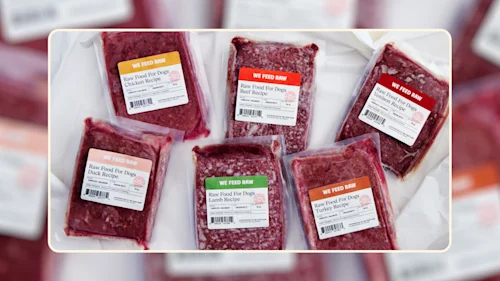
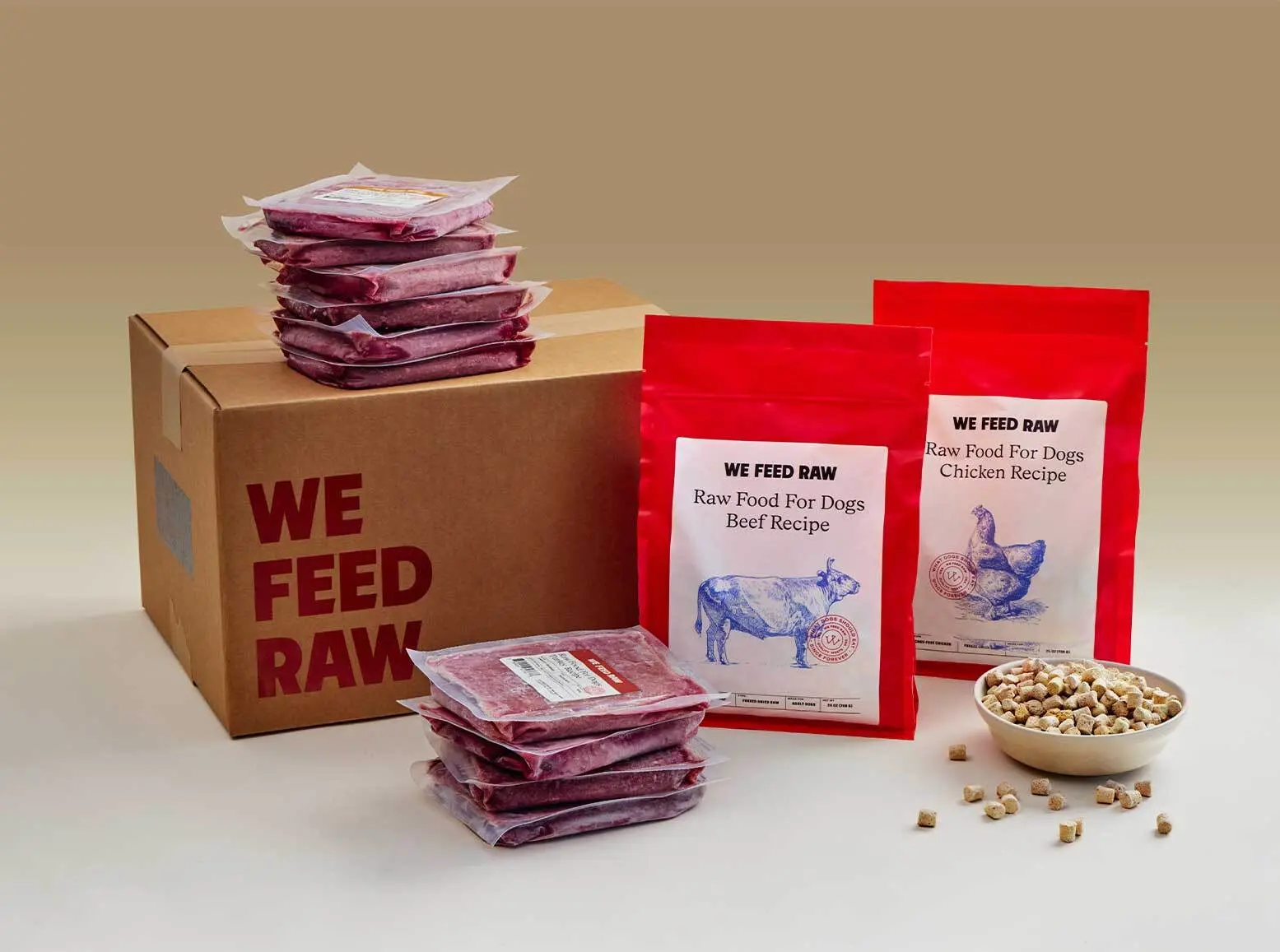
Commercial raw dog food is primarily available in two main formats: frozen raw patties and shelf-stable freeze-dried raw recipes. Both methods provide a massive nutritional upgrade over dry kibble, but they offer distinct advantages depending on your storage space and lifestyle.
What Are the Pros and Cons of Frozen Raw Dog Food?
Short of letting your dog hunt for their meals, frozen raw is about as close as you can get to what a canine would eat in the wild. Keeping raw patties frozen preserves the ingredients perfectly for up to six months while retaining the maximum amount of natural, hydrating moisture.
The primary trade-offs of a frozen raw diet are that it requires dedicated space in your freezer and requires you to remember to thaw the patties in the refrigerator before mealtime.
How Do Freeze-Dried Raw Recipes Work?
Freeze-dried raw dog food meals offer a highly convenient alternative that feeds just as easily as traditional kibble.
While standard dehydrating can remove moisture and reduce some raw benefits, our premium freeze-dried recipes for adult dogs are carefully crafted to preserve nutritional integrity. Featuring an 85/15 ratio of high-quality meat, organs, and non-GMO produce, our freeze-dried line provides a shelf-stable, lightweight option that is perfect for traveling, easy pantry storage, or a mess-free bowl topper.
How Do You Transition Your Dog to Raw Food Safely?
The safest way to transition a dog to a raw diet is to gradually introduce the fresh food over a minimum of 10 days.
While some dogs with strong stomachs can handle a sudden switch from kibble to raw without any issues, a step-by-step transition gives their digestive system and gut microbiome plenty of time to adapt to the rich nutrition.
What Is the Recommended Raw Diet Transition Schedule?
We recommend:
•Days 1 to 3: Serve 75% of their old current diet mixed with 25% of their new raw diet.
•Days 4 to 6: Move to a 50/50 split of old food and raw food.
•Days 7 to 9: Serve 25% of their old food mixed with 75% of the new raw food.
•Day 10: Your dog is ready to enjoy a fully 100% raw diet!
Keep in mind that every dog is unique. Some dogs may be able to transition more quickly, while dogs with especially sensitive digestive systems may need a few weeks to make the transition more gradually.
Use your dog’s stool as a guide. If your pup develops digestive problems, slow the transition down until their poop returns to normal.
What Are Some Practical Tips for Feeding Raw Safely?
Practical tips for feeding raw safely include starting the transition slowly, storing the meat properly in the freezer, and utilizing safe refrigeration practices for thawing. Treating commercial raw pet food with the same standard hygiene and care you use when preparing raw chicken for your human family ensures a perfectly safe kitchen environment.
To maintain optimal health and a smooth routine, keep these baseline safety habits in mind:
•Start Slowly: Introduce raw food gradually to allow your dog's digestive system to adjust. Start with small portions and gradually increase the amount over time.
•Choose a Reputable Brand: Opt for a reputable brand of raw dog food to ensure proper nutritional balance and safety.
•Store Raw Food Properly: Store raw food in a freezer to maintain freshness and prevent bacterial growth.
•Thaw Food Safely: Thaw frozen raw food in the refrigerator or using a cold water bath. Avoid thawing at room temperature.
•Monitor Your Dog's Health: Keep an eye on your dog's stool consistency, energy levels, and overall health. If you notice any changes, consult your veterinarian.
By following these tips, you can confidently and safely incorporate raw food into your dog's diet.
What Special Safety Considerations Exist for Raw Feeding?
The primary safety considerations for raw feeding revolve around proper meat sourcing, clean kitchen handling, and utilizing a validated pathogen defense step during production. Because canine dietary needs vary, starting with a clean, professionally managed product removes the primary risks associated with unbalanced or contaminated "DIY" raw diets.
Dr. Woodley highlights our commitment to manufacturing safety: “At We Feed Raw, safety is never an afterthought. Every meal is made with high-quality, USDA meats and handled with care using a process that protects both the nutrition and your dog’s well-being. As a holistic veterinarian, I feel confident recommending this food because it’s carefully sourced, safe and biologically appropriate.”
By following these guidelines, you can confidently and safely incorporate raw food into your dog's diet.
Choose We Feed Raw for Convenience and Quality
We Feed Raw is the premier choice for modern pet parents because we eliminate the stress and complexity of balancing a DIY raw diet by delivering perfectly portioned, expert-formulated meals directly to your door.
Creating a complete and balanced raw meal plan at home is incredibly difficult and time-consuming. On the other hand:
•We offer fully balanced frozen raw patties that have undergone high-pressure processing to safely inactivate potentially harmful pathogens, making our raw food the safest choice for your household.
•We also offer a premium freeze-dried line utilizing non-GMO produce for shelf-stable convenience.
By taking the guesswork out of daily portion math and providing a step-by-step transition framework, we make unlocking the natural power of raw nutrition simple, safe, and satisfying. Take our custom quiz today to get your dog started on their personalized meal plan.
Frequently Asked Questions (FAQs) About How to Feed Raw Dog Food
What are the guidelines for feeding my dog a raw food diet?
To feed a raw diet correctly, choose a reputable commercial brand to guarantee balanced nutrition, introduce the food gradually over 10 days, store the portions in the freezer, and always thaw meat safely inside your refrigerator.
What is the appropriate amount of raw food to feed my dog?
An adult dog should generally consume 2% to 2.5% of their ideal body weight daily. We Feed Raw automates this process by calculating your dog's exact caloric needs based on their age, breed, weight, and activity level.
Is there a standard portion size when feeding raw food to dogs?
There is no universal portion size because factors like age, metabolism, and lifestyle heavily influence a dog's caloric needs. We provide custom, pre-portioned meals tailored specifically to your dog's unique profile to prevent overfeeding.
What benefits can I expect from feeding my dog a raw food diet?
You can expect to see major health improvements, including vastly superior digestion, smaller and firmer stools, a softer and shinier coat, reduced skin allergies, better dental health, and stabilized energy levels.
What should I consider when feeding a raw food diet to my dog?
You should prioritize choosing an established brand that offers complete and balanced nutrition matching AAFCO profiles, commit to a gradual 10-day transition schedule, and follow safe raw meat handling protocols in your kitchen.
How do I calculate how much raw dog food to feed my pet?
You can estimate their daily portion by calculating 2% to 2.5% of their ideal adult weight. To eliminate the tricky math and guesswork, We Feed Raw automatically determines and packages your dog's exact daily portion requirements.
Our Meals Change Lives.
(Theirs + Yours.)
See health improvements from our raw meals in as little as 1 week.


