




Can Puppies Eat Raw Meat? The Ultimate Guide to Raw Food for Puppies
Table of Contents
- Can Puppies Eat Raw Meat?
- What Are the Benefits of Raw Food for Puppy Growth?
- What Is Raw Dog Food for Puppies?
- How Do I Start My Puppy on Raw Food?
- Is Raw Food Good for Puppies? What Are the Benefits of a Raw Diet for Puppies?
- Is a Raw Food Diet for Puppies Suitable for All Breeds?
- What Is the Best Puppy Food for Small Breeds?
- What Is the Best Puppy Food for Large Breeds?
- What Is the Best Food for Large-Breed Puppies With Sensitive Stomachs?
- What Is the Best Chicken-Free Puppy Food?
- How Often Should Puppies Eat?
- How Much Raw Dog Food Should a Puppy Eat?
- How Do I Get My Puppy to Eat Slower?
- How Can I Prevent My Puppy From Getting Dehydrated?
- How Do I Spot Food Allergies or Intolerances in My Puppy?
- Can Puppies Eat Freeze-Dried Raw Dog Food?
- Why Is We Feed Raw the Best Solution for a Puppy on a Raw Diet?
- Choose We Feed Raw for Your Puppy Today
Yes! Not only is raw dog food safe for puppies and adults alike, but it is also the most biologically appropriate way to fuel your growing dog's development.
Whether you’re new to the idea of raw food for puppies or you’re trying to choose the best raw dog food, this guide will walk you through everything you need to know to raise a thriving, healthy companion.
Keep reading to learn more about raw dog food for puppies.
Can Puppies Eat Raw Meat?
Yes, puppies can absolutely eat raw meat because their digestive systems are anatomically designed to process raw animal proteins, organs, and bones. From their sharp teeth designed for tearing muscle tissue to their highly acidic, short digestive tracts, canines are built to thrive on uncooked prey.
Per PhD animal nutritionist Dr. Richard Patton: "Dogs evolved eating meat, organs, bone, and gut contents. Modern nutrition should not ignore that biological reality."
What Are the Benefits of Raw Food for Puppy Growth?
The primary benefits of raw food for puppy growth include steady skeletal development, lean muscle formation, optimal brain health, and a resilient immune system.
Because puppies grow at an accelerated rate, they require dense, highly bioavailable nutrients that can be absorbed efficiently without the metabolic stress of high-glycemic starches. Feeding a biologically appropriate, complete and balanced raw diet supplies unheated amino acids, natural fatty acids, and essential minerals in the exact forms a young canine's body is built to utilize.
A species-appropriate raw diet supports critical developmental stages in several key ways:
•Steady Skeletal and Joint Development: Rapid, uneven growth spurts caused by carbohydrate-heavy kibble can strain developing joints and bones. Balanced raw food provides natural calcium and phosphorus from finely ground bone, promoting controlled, stable bone growth that helps protect against hip and elbow dysplasia.
•Lean Muscle and Tissue Growth: High-quality animal proteins deliver rich concentrations of essential amino acids, including leucine, lysine, and arginine. These building blocks support healthy ligament strength, cardiovascular development, and lean muscle mass without adding unnecessary fat.
•Brain and Vision Support: Raw animal fats and organ meats naturally provide essential omega-3 fatty acids, including DHA (docosahexaenoic acid). DHA is vital for central nervous system development, retinal health, and cognitive function during formative puppy training windows.
•Stronger Gut Immunity and Digestion: Roughly 70% to 80% of a puppy's immune defense is housed within the gut. Raw nutrition nourishes a diverse gut microbiome, promotes firm stools, and eliminates common processing fillers that frequently trigger early food sensitivities and puppy diarrhea.
•Early Dental Health: Unlike processed kibble that leaves behind a sticky carbohydrate film, raw food contains natural live enzymes that help prevent early plaque buildup while keeping puppy gums soothed and healthy as their adult teeth emerge.
According to holistic veterinarian Dr. Katie Woodley: "Starting a puppy on a raw diet sets them up for optimal health, providing essential nutrients in their most bioavailable form, supporting better digestion, improved coat health, increased energy, and stronger immune function."
To ensure your puppy reaps these growth benefits safely, their meals must be formulated to meet the Association of American Feed Control Officials (AAFCO) nutritional profiles for growth and reproduction, including the growth of large-size puppies.
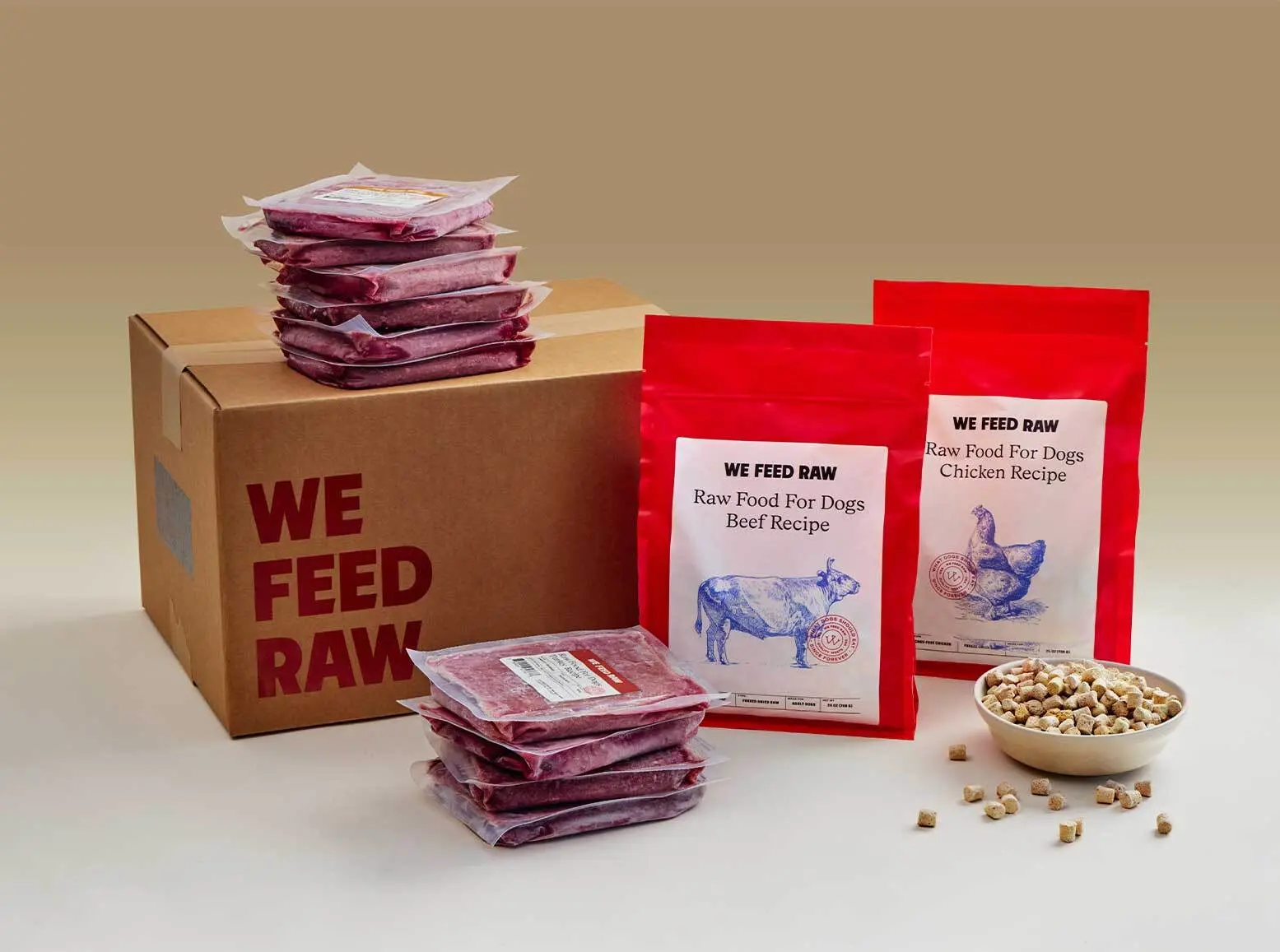
We Feed Raw's frozen patties deliver this complete nutritional profile in a soft, finely ground texture that is easy for puppy jaws to chew and digest. Every batch undergoes cold-water high-pressure processing to neutralize harmful pathogens, giving your growing puppy clean, uncompromised ancestral nutrition from the very start.
When Can Puppies Eat Raw Meat?
Puppies can begin eating raw meat as early as three to four weeks of age, right around the time they naturally start the weaning process. At this early stage, breeders typically introduce finely ground raw meat mixtures to help transition the litter smoothly away from the mother's milk.
Can Puppies Eat Raw Ground Beef?
While puppies can eat raw ground beef if the meat comes from a highly trusted source and is only one part of a complete and balanced diet, it’s safer to buy a commercial raw beef dog food recipe that:
•Is nutritionally complete and balanced for puppies specifically or for dogs of all life stages, including the growth of large-breed puppies
•Is subject to cold pasteurization or another kill step to inactivate pathogens that could otherwise make your puppy sick
Beef is an excellent source of zinc, iron, and essential fatty acids that support a growing puppy's daily energy demands.
Can Puppies Eat Raw Fish?
Yes, puppies can eat raw fish, but it must be properly sourced, cleared of dangerous bones, and frozen beforehand to eliminate potential parasites. Raw fish provides an abundance of omega-3 fatty acids, which are crucial for early brain and eye development.
Can Puppies Eat Raw Chicken Bones?
Yes, puppies can eat raw chicken bones, but they must be completely raw and appropriately sized for the puppy's breed. Raw chicken bones are soft, pliable, and easily digestible, providing a perfect natural source of calcium, whereas cooked bones splinter easily and pose severe choking hazards.
At We Feed Raw, we incorporate ground bones into our chicken frozen raw dog food, so your puppy can safely enjoy the benefits of raw chicken bones.
What Is Raw Dog Food for Puppies?
Raw dog food for puppies is a complete, unheated diet composed of muscle meat, organ tissue, and ground bone formulated to meet the exact skeletal growth requirements of young canines.
Unlike adult raw formulations, puppy raw food must maintain a precise ratio of calcium and phosphorus to support steady bone growth.
Is Raw Dog Food Safe for Puppies?
Raw dog food is safe for puppies if you know how to avoid unsafe raw diets by choosing commercially prepared options that incorporate a validated pathogen kill step.
Feeding raw grocery store meat or unverified homemade recipes can introduce harmful bacteria into your home.
What Are the Differences Between Raw and Fresh Dog Food?
Raw is one category of fresh dog food, but other types of fresh dog food include gently cooked, air-dried, or dehydrated meals that undergo light heating or moisture removal.
While all fresh choices upgrade your dog's diet from standard dry kibble, only a true raw diet keeps live digestive enzymes and natural protein structures fully intact.
How Do I Keep My Puppy and Family Safe When Feeding Raw?
You can keep your family safe by practicing standard kitchen sanitation protocols, such as washing your hands thoroughly after serving meals and cleaning your puppy's bowl with hot, soapy water immediately after every feeding.
Selecting a brand that uses commercial cold pasteurization removes active pathogens before the food enters your home.
Are Homemade Raw Dog Food Recipes Safe for Puppies?
No, homemade raw dog food recipes are generally not safe for puppies because achieving the precise micro-nutrient balance required for skeletal growth is incredibly difficult without clinical laboratory equipment.
Minor nutritional imbalances during a puppy's first year can lead to permanent joint deformities.
How Do I Start My Puppy on Raw Food?
You start your puppy on raw food by gradually introducing the new diet over several days to give their digestive tract and gut microbiome plenty of time to adapt. A measured approach ensures a comfortable transition.
When Can Puppies Start Eating Raw Dog Food?
Puppies can start eating commercial raw dog food the day you bring them home, typically between eight and twelve weeks of age.
How Do I Transition My Puppy to Raw Dog Food?
To transition your puppy safely, follow a progressive 7-10 day schedule, starting with 25% raw food mixed into 75% of their old food, slowly increasing the raw portions every few days until they are eating 100% raw meals.
What if My Puppy Is a Picky Eater?
If your puppy is a picky eater, try serving the raw food slightly chilled rather than freezing cold, or add a splash of warm bone broth to enhance the natural aroma of the fresh meat.
How Do I Ensure My Puppy Is Eating a Complete and Balanced Raw Diet?
The easiest way to ensure a balanced diet is to choose a brand whose meals are explicitly formulated by a qualified PhD animal nutrition expert to meet established nutritional profiles.
Is Raw Food Good for Puppies? What Are the Benefits of a Raw Diet for Puppies?
Yes, raw dog food is good for puppies because it delivers highly bioavailable nutrients in their most natural state. The benefits of raw dog food include smaller, firmer stools, improved skin hydration, cleaner teeth, and consistent, sustainable energy levels throughout the day.
Is Raw Dog Food Good for My Puppy’s Gut Health?
Yes, research has shown that puppies fed a raw diet are less likely to develop inflammatory gastrointestinal disorders later in life because the live enzymes and natural proteins promote a diverse, resilient gut microbiome.
According to veterinarian Dr. Katie Woodley, "Many of the dogs I work with experience improvements in digestion, skin health, and overall vitality when transitioned to a balanced raw diet."
Is a Raw Diet Good for My Puppy’s Bone and Joint Health?
Yes, a balanced raw diet delivers natural, highly absorbable forms of calcium, phosphorus, glucosamine, and chondroitin, which support smooth joint development and protect against early growth issues.
Can a Raw Diet Prevent Ear Infections in My Puppy?
Yes, evidence suggests that puppies who eat raw dog food are less likely to struggle with ear infections because the diet eliminates the inflammatory starches and fillers found in kibble that often trigger yeast overgrowth.
Is Raw Food Good for My Puppy’s Immune System?
Yes, the abundant zinc, selenium, and high-quality animal proteins found in raw meat strengthen the structural cells of your puppy's immune system, helping them ward off early infections.
Can a Raw Diet Prevent My Puppy From Developing Allergies?
Yes, studies have shown that early exposure to a raw diet may help prevent puppies from developing allergies as adult dogs by building natural immune tolerance.
Additionally, Dr. Patton says that "A balanced raw diet is the first remedy to try for any skin condition."
What Is the Best Food for a Puppy With a Sensitive Stomach?
The best food for a puppy with a sensitive stomach is a limited-ingredient, single-protein raw diet that bypasses hard-to-digest starches, artificial preservatives, and heavy plant fibers.
Raw meat is highly digestible, meaning your puppy's stomach has to do significantly less physical work to break down and extract vital daily nutrients.
Is a Raw Food Diet for Puppies Suitable for All Breeds?
Yes, a raw food diet is suitable for all dog breeds, ranging from tiny toy Chihuahuas to giant Great Danes. While their final adult sizes vary dramatically, all domestic dogs share the exact same internal biological blueprint and thrive on the same core ancestral nutrients.
What Is the Best Puppy Food for Small Breeds?
The best puppy food for small breeds is a high-calorie, nutrient-dense raw diet, shaped into accessible, easy-to-manage portions.
What Are the Nutritional Requirements for Small-Breed Puppies?
Small-breed puppies have an exceptionally high metabolic rate per pound, requiring more concentrated calories, healthy fats, and protein per serving than their larger counterparts to prevent low blood sugar.
Why Is a Raw Diet the Best Puppy Food for Small Breeds?
A raw diet delivers highly concentrated calories in a small physical volume, allowing toy and small-breed puppies to meet their high daily energy requirements without overloading their tiny stomachs.
What Is the Best Raw Puppy Food for Small-Breed Dogs?
The best choice is a finely ground commercial raw recipe that ensures trace minerals are distributed perfectly evenly through every single bite.
Is Raw Dog Food Safe for Small-Breed Puppies?
Yes, raw food is completely safe for small breeds, provided the bone content is ground to a fine, smooth consistency to eliminate any potential choking hazards.
What Is the Best Puppy Food for Large Breeds?
The best puppy food for large breeds is a balanced raw diet that controls early growth rates to protect their developing skeletal systems.
What Are the Nutritional Requirements for Large-Breed Puppies?
Large-breed puppies require precise, strictly regulated calcium and phosphorus ratios alongside moderate fat levels to ensure their large skeletons do not grow too quickly, which can stress developing joints.
What Makes the Best Large Breed Puppy Raw Food Stand Out?
The best large-breed puppy food stands out by strictly adhering to established growth guidelines and keeping calcium levels within safe limits.
What Are the Benefits of Raw Food for Large-Breed Puppies?
Raw food promotes a lean body condition, reducing physical weight stress on growing joints while providing natural building blocks for durable cartilage.
Do Large Breed Puppies Have Unique Feeding Guidelines?
Yes, large-breed puppies must have their daily food intake calculated accurately based on their expected adult weight to avoid overfeeding and rapid growth spurts.
Is Raw Dog Food the Best Large-Breed Puppy Food?
Yes, because it naturally satisfies a large puppy's appetite with dense proteins rather than expanding starches, making it easier to maintain an ideal, lean body score.
What Is the Best Food for Large-Breed Puppies With Sensitive Stomachs?
The best food for large-breed puppies with sensitive stomachs is a single-protein raw diet that uses a novel or easily digestible animal protein source and completely omits complex grains and synthetic fillers.
What Are the Symptoms of a Sensitive Stomach in Large-Breed Puppies?
Common signs include frequent soft stools, excessive flatulence, a rumbling stomach, occasional vomiting of bile, or a sudden lack of interest in mealtime.
What Causes Sensitive Stomachs in Puppies?
Puppy stomach issues stem from multiple internal and external factors that can temporarily disrupt their developing digestive tracts.
Does My Puppy With a Sensitive Stomach Have a Food Allergy or a Food Intolerance?
A food intolerance is a localized digestive challenge where a puppy struggles to break down a specific ingredient, while a true food allergy involves a systemic immune system response.
Food intolerances are more common in dogs than food allergies.
What Are Common Dog Food Intolerances and Allergies?
Canines most frequently develop food intolerances to highly processed plant ingredients, dairy, or specific overused animal proteins that have been altered by extreme factory-cooking heat.
What Dog Food Ingredients Cause Upset Stomachs?
The most frequent culprits behind puppy digestive distress include corn, wheat, soy, artificial food colorings, chemical preservatives, and low-quality meat by-products.
Can Sudden Food Changes Upset My Puppy’s Stomach?
Yes, switching your puppy's food brand or protein source overnight can shock their gut bacteria, resulting in temporary diarrhea or mild cramping.
Can Infections Cause Upset Stomachs in Puppies?
Yes, internal parasites like roundworms or viral infections can irritate the intestinal lining, making it difficult for your puppy to retain food.
Can Stress Cause Sensitive Stomachs in Puppies?
Yes, environmental changes such as moving into a new home, crate training, or visiting the vet can trigger stress responses that speed up intestinal transit.
What Do I Look for in a Puppy Food for Sensitive Stomachs?
Look for an uncooked, highly bioavailable diet featuring a minimal ingredient list, zero filler grains, and clear tracking transparency from the manufacturer.
What Is the Best Chicken-Free Puppy Food?
The best chicken-free puppy food is a premium raw diet utilizing beef, turkey, duck, or lamb as the primary animal protein source. Chicken is a highly common dietary trigger for sensitive dogs, making alternative protein rotations incredibly beneficial.
What Are Symptoms of Chicken Allergies in Dogs?
Symptoms include chronic paw licking, red or itchy skin around the ears and belly, recurrent ear infections, and persistent loose stools.
How Do I Make Homemade Chicken-Free Puppy Food?
Making a balanced version at home requires detailed laboratory guidance, making it far safer to rely on professional commercial formulations to avoid trace nutrient deficiencies.
How Do I Transition My Puppy to Chicken-Free Food?
Gradually introduce the new chicken-free protein over a week, closely monitoring your puppy's coat and stool consistency as the old chicken-based elements leave their system.
How Do I Find Chicken-Free Dog Food?
Read the entire ingredient panel carefully, looking for hidden chicken fats or broths that manufacturers frequently slip into recipes that claim alternative flavors on the front label.
We Feed Raw offers four chicken-free recipes:
How Often Should Puppies Eat?
Young puppies between 8 weeks and 6 months old generally thrive best when their total daily food portion is split into three or four separate meals to keep their blood sugar stable.
When Should Puppies Eat?
Establish consistent feeding times, such as 7 AM, 12 PM, and 5 PM, ensuring their final meal finishes a few hours before bedtime to allow ample time for an evening bathroom break.
How Much Raw Dog Food Should a Puppy Eat?
Puppies require a significantly higher percentage of food relative to their current body weight than adult dogs because they are burning calories rapidly to grow, making a customized weight calculator essential.
When you choose We Feed Raw, we calculate exactly how much food your puppy should eat and help you adjust feeding amounts based on how your puppy is growing.
How Can I Tell if My Puppy Is Growing at an Appropriate Rate?
You should be able to easily feel your puppy's ribs beneath a thin layer of muscle, and they should maintain a visible waistline when viewed from above.
Why Is It Important to Ensure That Puppies Grow at the Right Speed?
Growing too quickly puts excessive structural pressure on soft, uncalcified puppy bones, which can cause permanent skeletal damage.
Why Is My Puppy Always Hungry?
Puppies experience sudden, internal growth spurts that require massive waves of cellular energy, though a raw diet satisfies this hunger far longer than carbohydrate-heavy kibble
How Do I Get My Puppy to Eat Slower?
Use a shallow dish or spread the raw patty thin across a textured feeding mat to force your puppy to lick up their meal slowly rather than gulping it down. You can also stuff their food into a Kong, Toppl, or similar toy and freeze it for a few hours for the longest-lasting mealtimes.
How Can I Prevent My Puppy From Getting Dehydrated?
Fresh raw food naturally contains abundant moisture, which supports optimal kidney health and keeps your puppy perfectly hydrated out of the box. That said, you should always provide your puppy with clean, fresh water.
How Do I Spot Food Allergies or Intolerances in My Puppy?
Watch for persistent scratching, red skin patches, or chronic loose stools that appear shortly after you introduce a new protein source.
Can Puppies Eat Freeze-Dried Raw Dog Food?
No, puppies should not eat We Feed Raw’s freeze-dried raw recipes as their complete daily meal, because our freeze-dried lines are specifically tailored to meet the maintenance profiles of adult dogs (however, small freeze-dried pieces work wonderfully as high-value training rewards for older puppies).
Why Is We Feed Raw the Best Solution for a Puppy on a Raw Diet?
We Feed Raw is the best raw dog food for puppies because we take all the complex math, sourcing anxieties, and safety risks completely out of your hands. Our pre-portioned meals deliver absolute nutritional peace of mind straight to your doorstep.
Are We Feed Raw’s Recipes AAFCO-Approved for Puppies?
All five of our core frozen raw recipes are explicitly approved to meet or exceed strict nutritional standards for dogs of all life stages, including the growth of large-breed puppies.
However, our freeze-dried recipes are formulated for adult dogs only.
How Does We Feed Raw Keep Puppies and People Safe?
We protect your entire household by subjecting 100% of our production runs to non-thermal cold pasteurization. This advanced high-pressure process eliminates dangerous bacteria without using heat, keeping the food completely raw and safe.
Does We Feed Raw Offer Freeze-Dried Raw Food for Puppies?
Our convenient freeze-dried raw recipes are formulated specifically for adult dogs, but pet parents can confidently use these premium, shelf-stable pieces as healthy, single-ingredient training treats for growing puppies.
Choose We Feed Raw for Your Puppy Today
Give your growing companion the ultimate head start in life with a biologically appropriate, pathogen-free raw diet tailored specifically to their evolutionary needs. Eliminate the guesswork at mealtime and enjoy the confidence of a perfectly balanced, recall-free, fresh-food routine.
To get your puppy started on We Feed Raw, take our quiz today.
Our Meals Change Lives.
(Theirs + Yours.)
See health improvements from our raw meals in as little as 1 week.
Find your dog's perfect plan


